
Emergency Garage Door Repair Near Me: What Lakewood Homeowners Should Do First
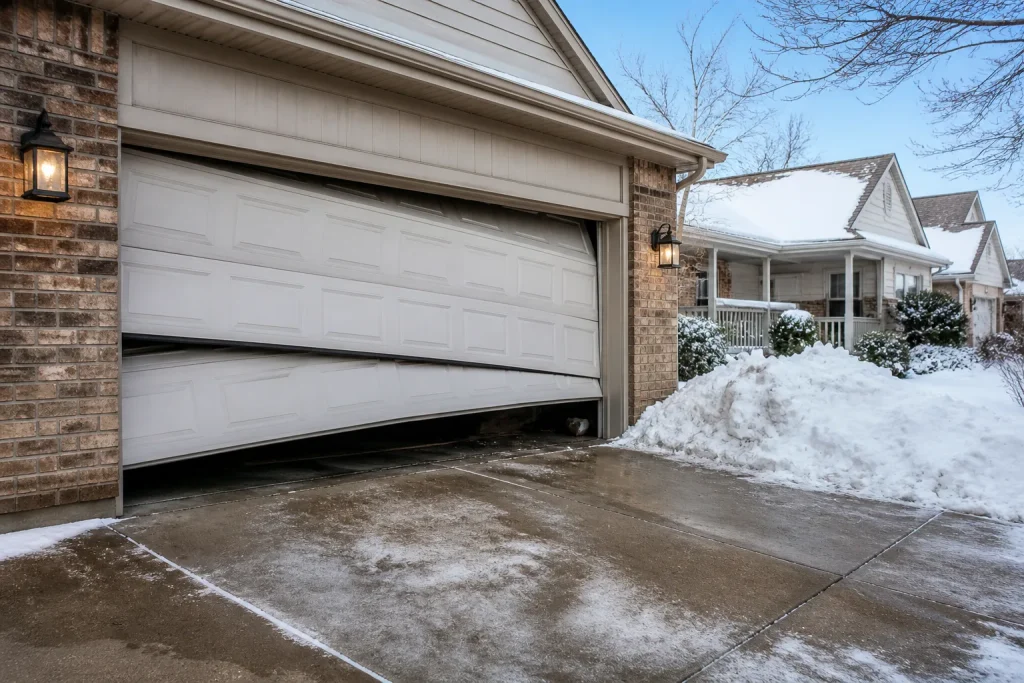
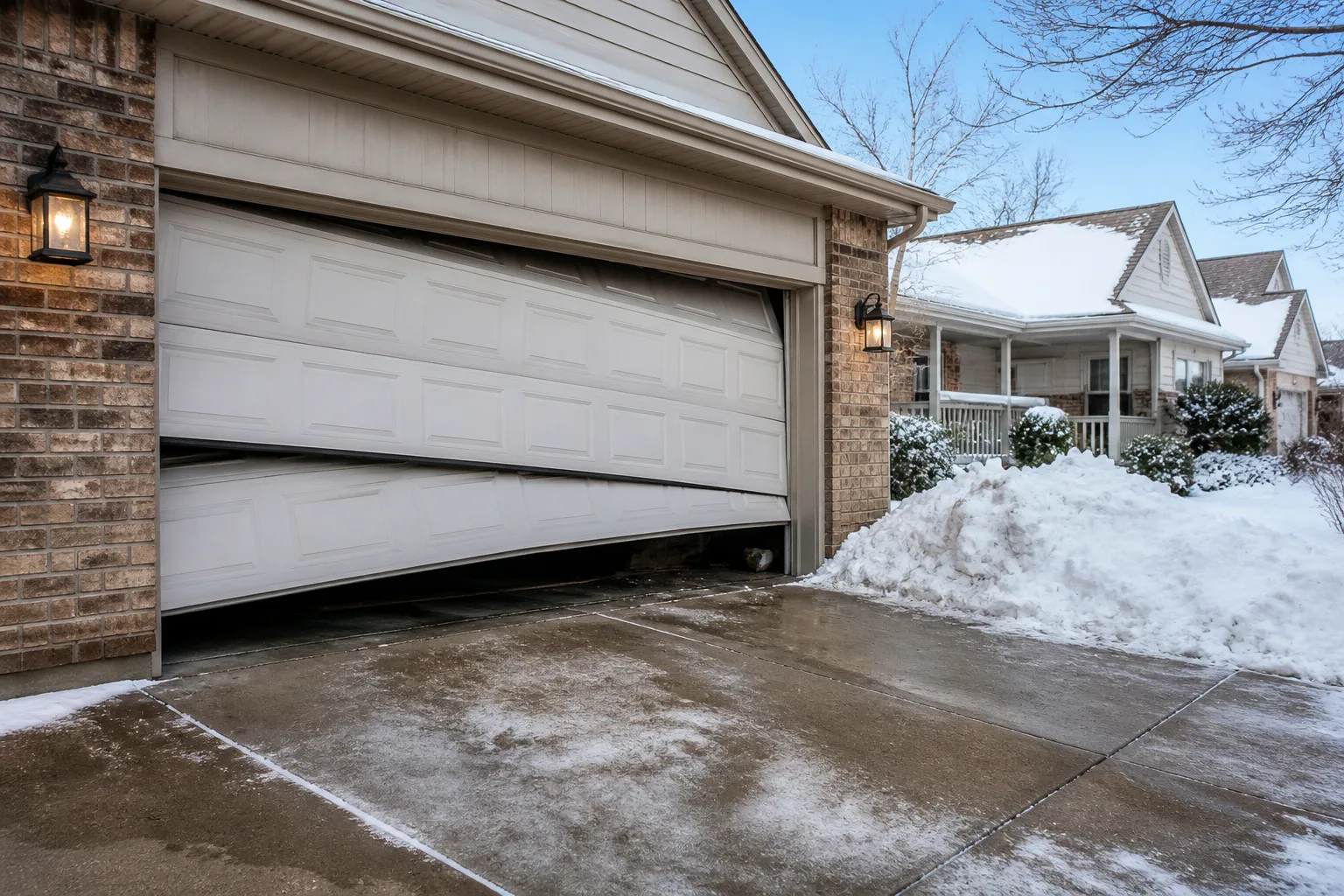
Trying to force a garage door open by hand when a cable has snapped is one of the most common ways a bent panel becomes a ruined panel. It’s avoidable, and it comes down to one thing: knowing which failure you’re looking at before you touch anything. The first thirty minutes after a door fails are when homeowners do the most accidental damage. Here’s the order we’d follow if it were our own garage in Lakewood.
If you’d rather not sort it out yourself, call (855) 554-3769. We answer 24/7, with fast dispatch from 7am to 7pm, Sunday through Friday.
Your First 15 Minutes: Triage by Failure Type
Not every garage door problem is an emergency, and knowing the difference saves you money. In our experience, the calls that turn into the biggest repair bills start with a homeowner guessing wrong about which kind of failure they have. Work through this in order and stop at whichever one matches what you see.
- Stop the opener. If the door is partly open or stuck, pull the wall switch or unplug the opener motor so nobody cycles it by accident.
- Look at the springs. Torsion springs sit above the door on a steel shaft. If you see a visible gap in the coil, that spring is broken. Extension springs run along the sides above the tracks, and a broken one usually hangs loose.
- Check the cables. Look along each side for a cable that’s come off its drum or hangs slack near the bottom bracket. A slack cable means the door has lost its counterbalance on that side.
- Look at the door in the tracks. One side lower than the other, rollers out of the channel, or panels out of alignment all point to the door being off track.
- Test nothing under tension. If steps 2 through 4 turned up anything, leave the door exactly where it sits and move on to securing the opening.
If all five came back clear, you’re probably looking at an opener or sensor issue, which is far less serious. Keep reading, because that’s a different situation with a different set of steps. The technicians we connect homeowners with have up to 12 years of experience, and they’ll tell you plainly which of these categories your door falls into before any work starts.
Broken Spring vs. Dead Opener: How to Tell Before You Call
A broken spring means the door will not lift safely by hand, and the fix is a repair. A dead opener or a misaligned sensor means the door is mechanically fine and the motor or safety circuit has quit, which is usually a smaller job. The quick test: with the opener disconnected, a door with good springs lifts a few inches with light, steady pressure and stays where you put it. A door with a broken spring feels extremely heavy and won’t stay up.
We tell homeowners to separate their problem into one of two buckets before calling:
- True emergency: broken spring, a cable off its drum, a door off track, or glass panels damaged. The door can’t be operated safely and often can’t be secured properly. This is where you want a trained technician on site.
- Urgent inconvenience: dead opener battery, misaligned safety sensor, a remote that stopped working, a door that closes then reverses. Frustrating, but you can usually leave the door closed and get it looked at without the same urgency.
Why does the distinction matter? Because it tells you how fast to move and keeps you from treating a weak remote battery like a structural failure. In Lakewood, afternoon wind gusts and summer temperature swings between day and night put real stress on springs and cables over time, so those failures do show up more than you’d expect. A garage door opener repair call gets a dedicated diagnostic on the motorized side, separate from the door itself. That matters because a stuck door is often blamed on the opener when the real problem is the spring, or the reverse.
The Emergency Release Cord: When to Pull It and When You Absolutely Shouldn’t
Pull the red release cord when you have a power outage and a mechanically sound door, and nowhere else. That pull disconnects the opener from the door so you can lift it by hand. If a spring is broken or a cable has come off, the door has lost its counterbalance and weighs roughly what it would if you tried to lift a car hood with the struts gone. Pulling the release in that scenario lets a heavy door come down fast under its own weight.
These are the situations where the cord is safe to use:
- The power is out, but the door lifted with normal hand pressure before the outage.
- The opener has failed but the door itself moves freely.
- You’ve confirmed visually that both springs are intact and both cables are seated.
Leave the cord alone when a spring is visibly broken, when a cable is off its drum or wrapped irregularly, when the door is sitting crooked in the tracks, or when you can’t tell what’s wrong. A door that’s out of balance can drop suddenly and crush whatever’s underneath; the springs and cables handle hundreds of pounds of tension, and that’s not something to test by hand. If you’re unsure, don’t guess. Call (855) 554-3769, tell us what you see, and we’ll walk you through whether it’s safe to touch.
How to Secure the Garage If the Door Is Stuck Open
If the door won’t close and the opening is exposed, your goal for the next hour is keeping the garage closed off, not fixing the door. In practice, Lakewood homeowners usually have a few workable options already in their garage.
- Back the car up to the opening. If you have a vehicle inside, parking it close to the doorway blocks the most obvious view and access.
- Brace the door with a wedge or a section of lumber at the base. Only do this if the door is sitting level and stable, never if it’s hanging crooked or under load.
- Use a crossbar. A length of two-by-four or a heavy dowel across the inside of the tracks at the base of the door holds a level door in place.
- Take valuables and tools out of sight. If the door is stuck open overnight, move the obvious stuff into the house.
Don’t try to force a crooked door back into its tracks, and don’t prop an unbalanced door with something that can slide out. If you’re not confident the door is stable, treat it as open and secure the rest of the property instead. We’d rather see a door left alone than a homeowner hurt trying to close it.
What to Have Ready Before You Call
The fastest way to get your door fixed is to give the technician enough information to bring the right parts on the first trip. Before you dial, jot down or photograph the following:
- The failure, in plain words. “It went up about a foot and stopped with a loud bang” tells a technician a broken spring. “It closes and then goes right back up” points to a sensor or limit switch.
- The door make and model. Look for a label on the inside face of the top panel or on the opener housing. Common brands in Lakewood homes include Amarr, Wayne Dalton, Craftsman, and Raynor, and knowing yours helps the tech plan ahead.
- Opener brand and model. Same deal, and it matters whether the opener is a LiftMaster, Chamberlain, Genie, or another brand. We’re set up to work on all eight of the major door and opener brands, so this is about parts, not whether we can help.
- Photos from a few angles. Include a wide shot of the whole door, a close-up of any broken spring or off-track roller, and a shot of the opener’s label.
- Door size and material. A single or double door, steel, wood, or aluminum, and whether there are windows.
Send those over when you call, and the technician can often tell you what to expect before arriving. And if you don’t know where the label is, don’t worry. “I can’t find the model number” is a fair answer and doesn’t stop anything.
When to Call a Pro
Call a professional whenever the spring, cable, or track is involved. Those are the parts under real tension, and the risk of injury from working on them yourself is higher than most people assume. We’ve seen a lot of “I tried to fix it myself” calls turn a single broken spring into a full door replacement, and it’s almost always avoidable. You should also call if you’re not sure what failed, if the door won’t close and you need it secured, or if the opener keeps cycling on its own.
For a routine garage door repair in Lakewood that doesn’t involve tension parts, a homeowner with the right tools can sometimes handle a roller swap or a track adjustment. If you’re in doubt, that’s your answer. We’re licensed and insured, and the price is quoted and agreed before any work starts, so there’s no surprise on the invoice.
Related services in Lakewood: for spring, cable, and panel work, see garage door repair. For board-level motor and safety-reverse issues, see garage door opener repair. Everything else, including full door replacement, runs from Linden Garage Door Repair.
The Bottom Line
If a garage door fails, the safest move is usually to stop, look at the springs and cables, and leave the door alone if either looks wrong. Pull the emergency release only in a power outage with a mechanically sound door. Secure the opening if the door is stuck open, and gather a few specifics before you call so the technician isn’t guessing. The difference between a true emergency and an urgent inconvenience keeps your repair bill sensible and keeps you safe in the meantime.
We work on your brand, from a broken spring to a full new door, whether it’s Amarr, Wayne Dalton, Craftsman, Raynor, or any of the eight major brands. Our technicians have up to 12 years of experience and diagnose the door and the opener separately, so you get the right fix rather than the easiest upsell. If you’re in Lakewood and need help, Linden Garage Door Repair offers free estimates. Call (855) 554-3769. We answer 24/7. Fast dispatch from 7am to 7pm, Sunday through Friday.
Frequently Asked Questions
No. A door with a broken spring has lost its counterbalance and is far too heavy to lift safely by hand, and forcing it can bend panels or drop the door on you. Keep it closed, secure the opening if you can, and call (855) 554-3769 for a same-day slot.
Usually not. A dead opener is an urgent inconvenience, not an emergency, because the door is still mechanically sound. You can often release it by hand and open it manually if the door itself moves freely. Call (855) 554-3769 and we’ll get a dedicated opener diagnostic scheduled.
Look at the door itself, not the motor. If one side hangs lower than the other, a roller is out of the channel, or the door scrapes and jams when partly open, it’s off track. If the door moves smoothly by hand but the motor won’t run it, the opener is the problem. Call (855) 554-3769 if you’re not sure, and we’ll help you sort it.
Have the failure described in plain words, the door and opener make and model if you can find the label, and a couple of photos from different angles. Even without the model number, call (855) 554-3769. We answer 24/7. Fast dispatch from 7am to 7pm, Sunday through Friday, and estimates are free.
Written by the team at Linden Garage Door Repair.
Need Garage Door Help?
Call Linden Garage Door Repair - licensed & insured, here with fast help in Lakewood.
(855) 554-3769