
Last updated November 15, 2026
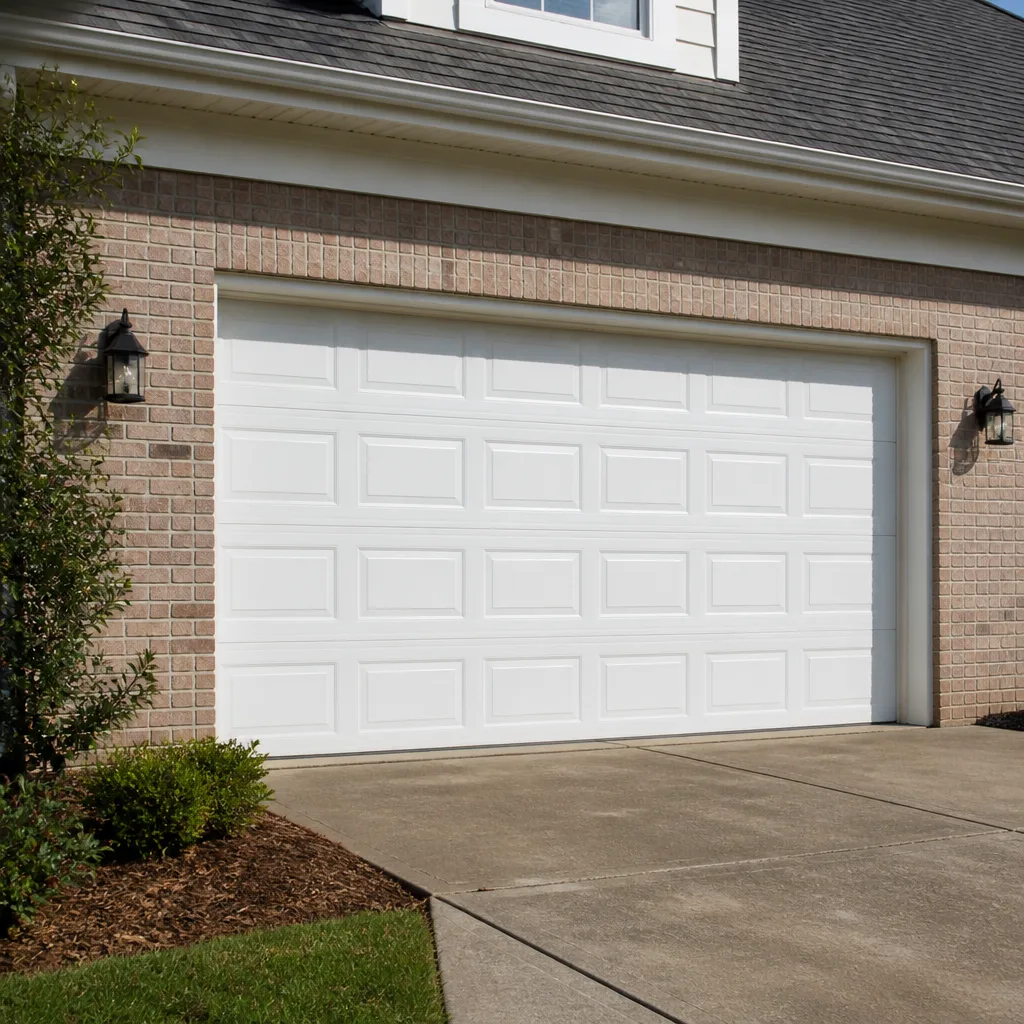 Raised-panel steel
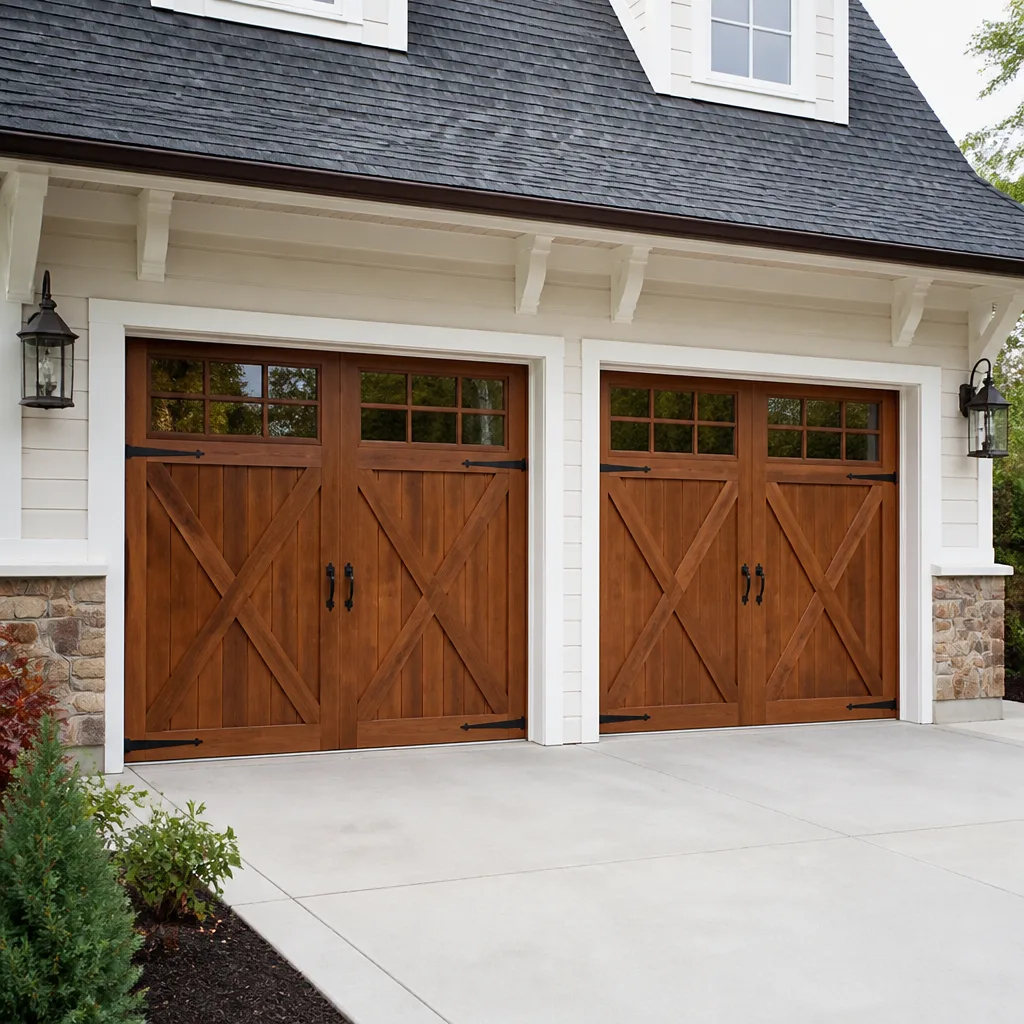 Carriage house
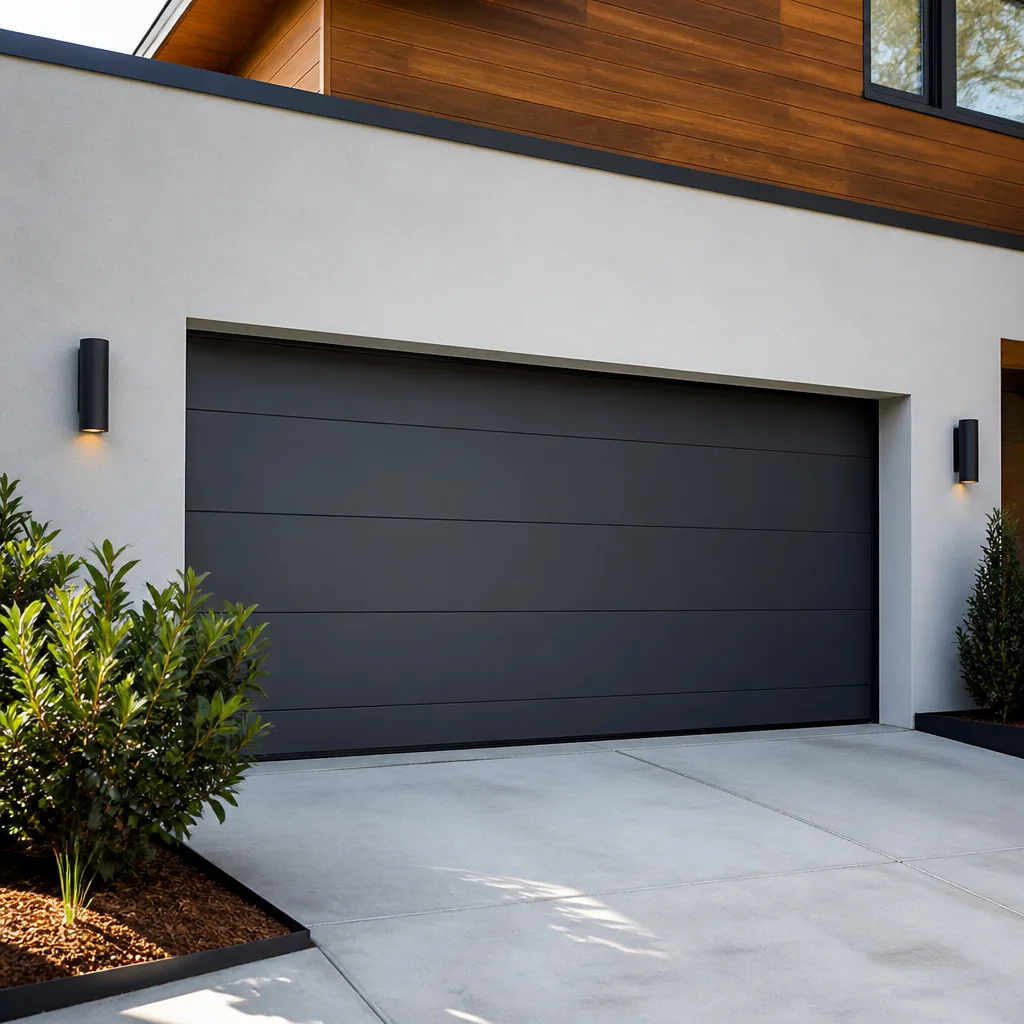 Modern flush
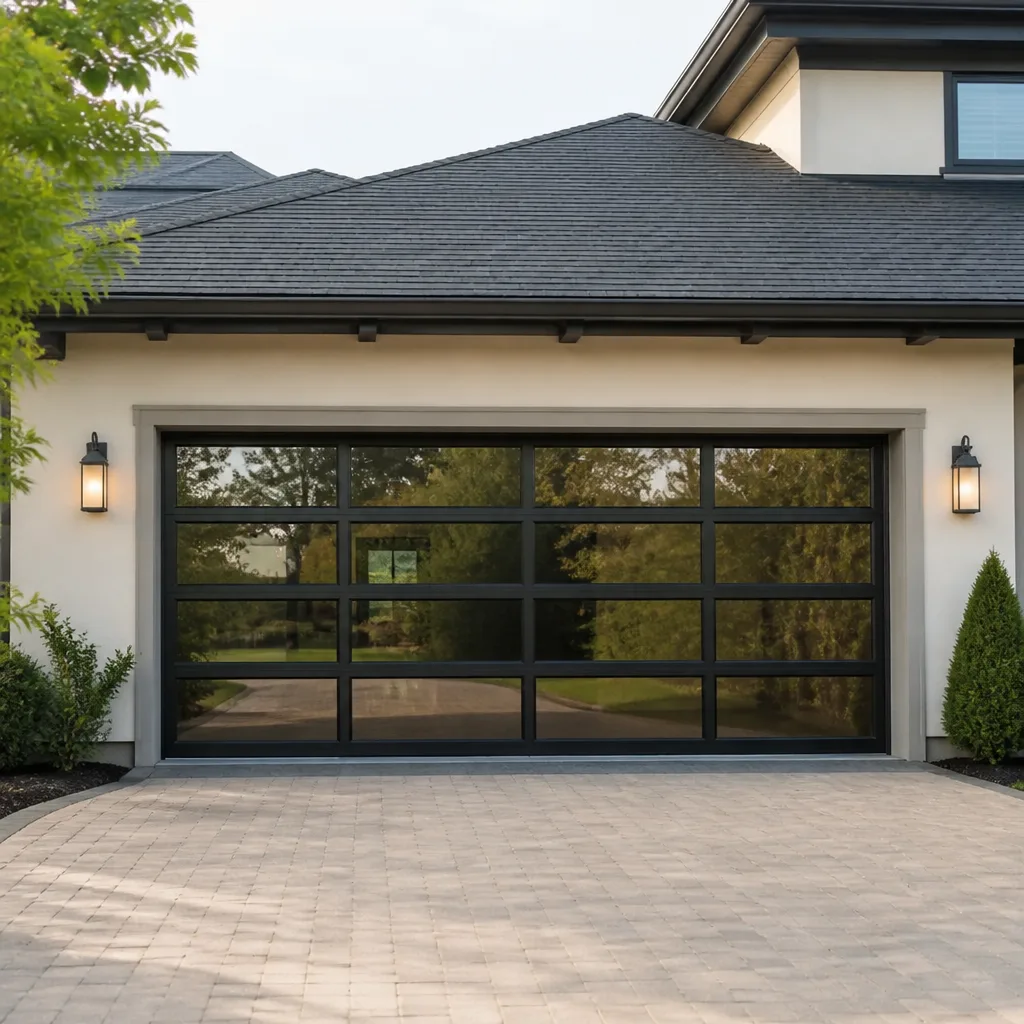 Full-view glass
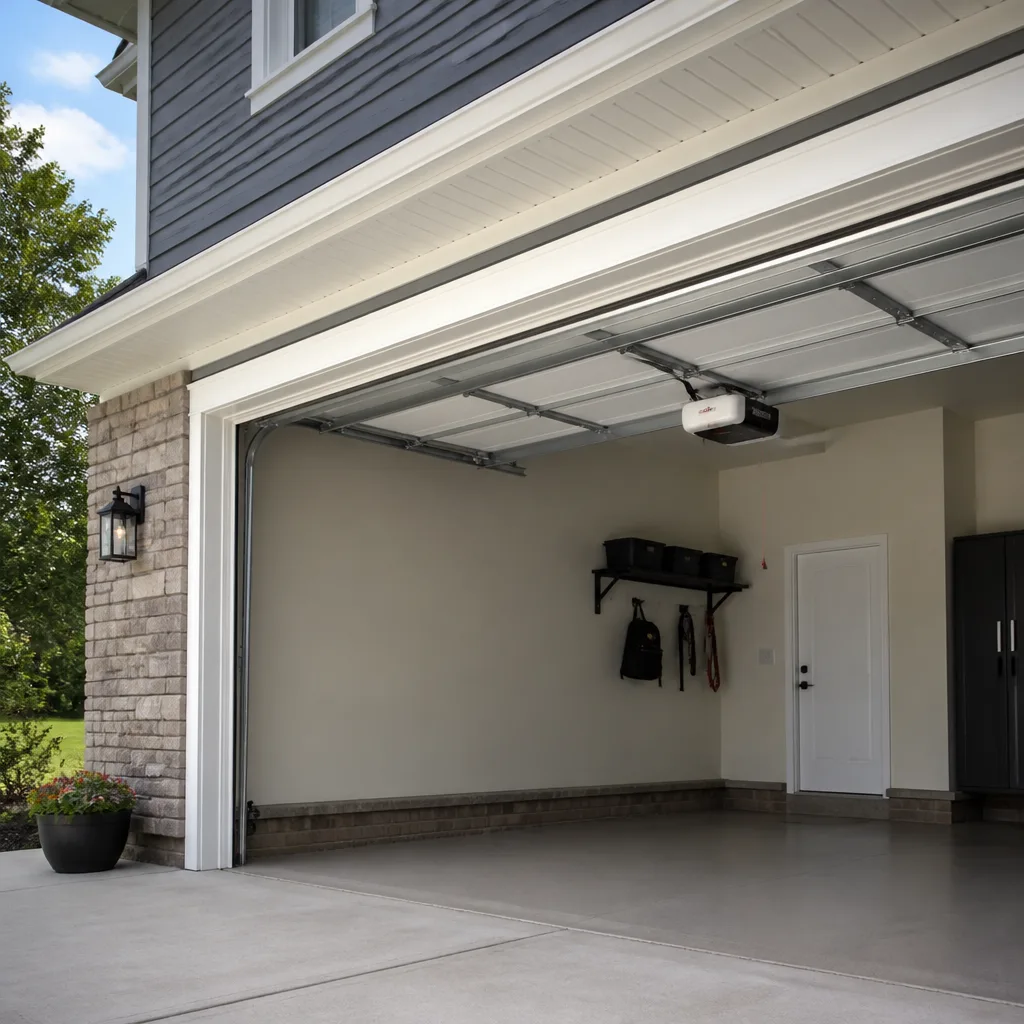 LiftMaster openers
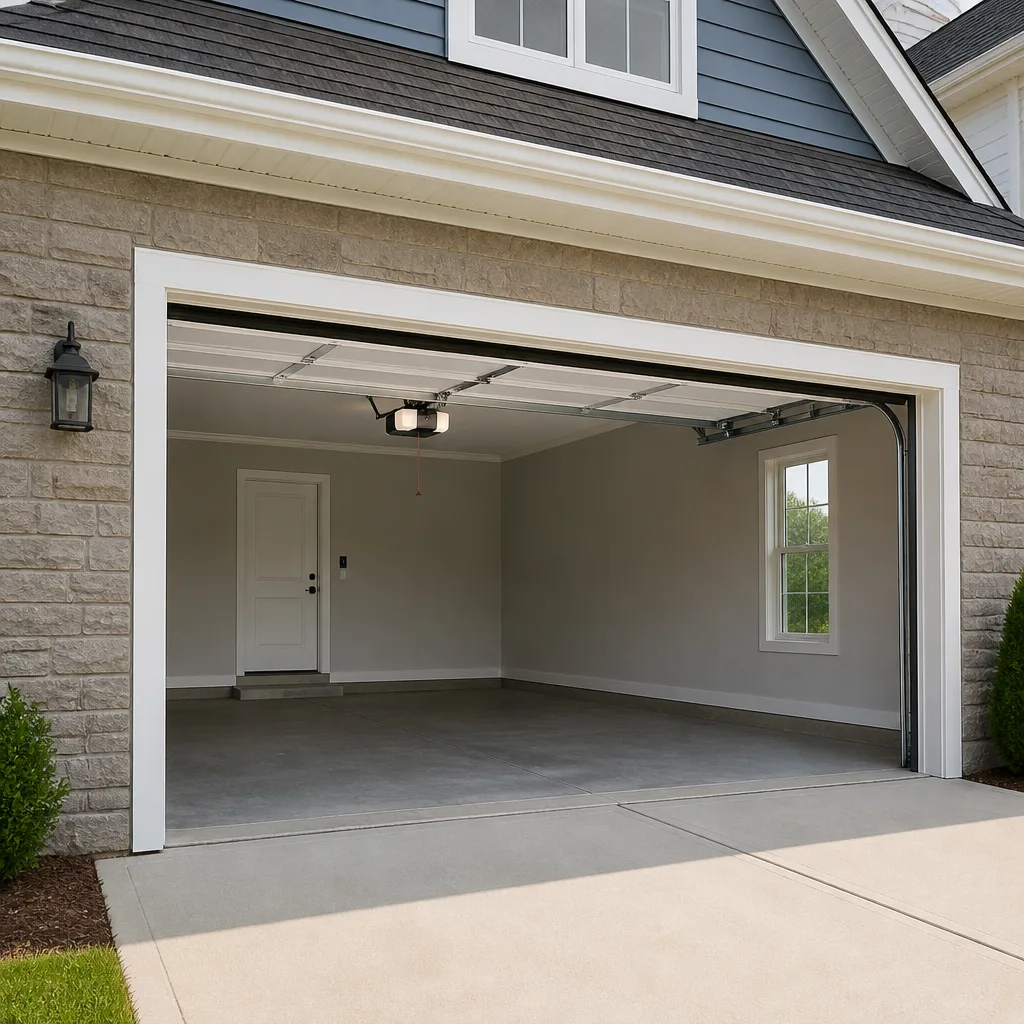 Chamberlain openers
Full 25-point door and opener safety check with every visit - springs, cables, rollers, tracks, and your LiftMaster or Chamberlain opener included
You get a price before we start. It does not change when the pro arrives.
Get your free estimateGarage Door Repair Troubleshooting in Lakewood: Common Problems and How to Fix Them
Most homeowners treat a failing garage door like a mystery. The door makes a strange noise, or it stops halfway up, or the remote quits working, and suddenly the whole system feels unpredictable. Here’s what we’ve learned after years of diagnosing these calls: it almost never is a mystery. The overwhelming majority of problems trace back to three mechanical components most people walk past every day without ever noticing – the springs, the tracks and rollers, and the opener’s force and travel settings. This guide maps what you’re hearing and seeing to the root cause behind it, so you know whether it’s a five-minute check or a genuine call-the-tech situation. We’ll cover how Lakewood’s seasons affect these parts, the two tests you can safely run yourself, and the exact details to have ready when you call.
Quick Answer
Garage door problems in Lakewood usually fall into four root-cause categories: a broken or weakened spring, misaligned tracks or worn rollers, an opener with a faulty sensor or wrong force/travel settings, and a power or remote signal problem. Knowing which category your symptom belongs to tells you right away whether it’s a safe DIY check or a job that needs a trained technician – springs and cables under tension are never a DIY repair.
Styles & brands we work with
- Raised-panel steel
- Carriage house
- Modern flush
- Full-view glass
- LiftMaster openers
- Chamberlain openers
Table of Contents
- The Four Root Causes Behind Almost Every Garage Door Problem
- Symptom-to-Root-Cause Mapping: Match What You See to What’s Wrong
- How Lakewood’s Temperature Swings Cause Specific Failures
- The Force Test and Balance Test You Can Run Yourself
- DIY-Safe Fixes vs. Touch-Nothing Repairs
- What to Tell a Technician When You Call
- Why Your Door Won’t Close: The Sensor Checklist
- Opener Problems Deserve Their Own Diagnosis
The Four Root Causes Behind Almost Every Garage Door Problem
Every garage door is a balancing act between the door’s weight and the springs that hold it. When that balance is right, the opener only has to guide the door up and down. When it’s off, everything downstream starts to fail – the opener strains, the door jerks, the motor overheats. Nearly every symptom a homeowner describes traces back to one of these four areas.
The four categories
- Balance and spring problems. A torsion or extension spring that has lost tension or snapped shows up as a door that feels heavy, slams down, or won’t stay up halfway. This is the single most common repair category we see in Lakewood.
- Track and roller misalignment. Bent tracks, worn nylon or steel rollers, and loose hinges cause grinding, wobbling, and doors that bind on one side. This is a mechanical-travel problem, not an opener problem.
- Opener settings and sensors. Force limits set too low, travel limits set too short, or a safety sensor knocked out of alignment will stop a perfectly good door dead. The motor and door are fine; the brain running them is confused.
- Power, remote, and signal faults. A dead remote battery, a tripped wall outlet, or radio interference from a nearby device stops the door from responding at all.
The value of knowing these four buckets is diagnostic speed. A door that won’t move at all points at category four. A door that moves a few inches and reverses points at category two or three. A door that crashes down points at category one, and you should not run that door again until it’s checked. That single distinction saves homeowners in Lakewood from guessing, and it keeps people from standing under a door that’s about to fail.
Symptom-to-Root-Cause Mapping: Match What You See to What’s Wrong
This is the section we wish every homeowner read before calling. Instead of describing a garage door as “broken,” the better approach is to describe what it actually does. Here’s how the most common symptoms map to their root causes.
Door won’t move at all
Check the wall outlet the opener is plugged into, then test the wall control instead of the remote. If the wall control works and the remote doesn’t, it’s a remote battery or a signal issue. If neither works, look at whether the opener’s indicator light is blinking. A door that’s completely dead usually isn’t a mechanical problem at all; it’s power or electronics.
Door moves a few inches and reverses
This is almost always a sensor or force-limit problem. The opener senses resistance it wasn’t expecting and reverses for safety. Look at the two small lenses near the floor on either side of the door – if they’re misaligned, dusty, or one is blinking, the door will do exactly this.
Door goes up but won’t come down
Classic sensor obstruction. Something is blocking the safety beam, or the lenses have shifted. This is a safe, quick check most homeowners can resolve in minutes by wiping the lenses and confirming they’re pointed at each other.
Door moves unevenly or binds on one side
A bent track or a worn roller on one side. If you watch the door and it leans or grinds on a single side, the track or roller assembly is the culprit. Don’t force the opener to run through the bind; a technician should realign the track.
Loud grinding, squealing, or popping
Noise points at roller and hinge wear, loose hardware, or a dry torsion spring. This is often the earliest warning sign, and hearing it early is what prevents a bigger repair later. A worn part making noise once is a cheap fix; that same part failing is a stranded car.
How Lakewood’s Temperature Swings Cause Specific Failures
Lakewood sits at elevation on the edge of the Front Range, and its weather does something specific to garage door hardware: it swings. Cold snaps and hard freezes in winter give way to hot, dry summers, and that cycle works on metal and lubrication all year. The symptoms you notice aren’t random – they follow the season.
Winter: spring tension loss
Torsion and extension springs are steel under constant load. Cold makes steel more brittle, and the constant expanding and contracting as temperatures drop below freezing and climb back up stresses the metal. When a spring finally lets go, it’s usually on a cold morning, and it almost always fails at the weakest point in the coil. A snap like that is loud and unmistakable. In Lakewood’s cold snaps, we see a sharp increase in “door slammed down and won’t open” calls. A door with a broken spring should not be operated – not even once – because the opener will be pushing a weight it was never designed to lift.
Summer: track gaps and lubrication breakdown
The same expansion principle works on tracks. Heat causes metal tracks to flex, and over a season of hot days and cold nights, mounting points loosen. That’s how a door that ran perfectly in spring starts binding in July. Dry heat also burns off the lubricant on rollers and springs faster than it does in a milder climate, which is why the noise complaints pick up in midsummer. A door in Lakewood benefits from re-lubrication more often than the sticker on the can suggests.
Spring and fall: the transition seasons
The in-between weeks are when the biggest temperature jumps happen. Hardware that was torqued down in one season can work loose by the next. This is the best time for a quick visual check: look at the tracks for gaps where the wall brackets mount, and listen for new noises.
The Force Test and Balance Test You Can Run Yourself
Before you call anyone, two simple tests tell you a lot about the health of the whole system. Neither requires tools, and both are safe if you follow the steps exactly. Skip both if your door is visibly damaged, hanging crooked, or has a broken spring – in that case, call for garage door repair and keep hands clear.
The balance test
The balance test checks whether the springs are still doing their job.
- Pull the manual release cord to disconnect the opener from the door (the carriage on the rail will disengage).
- Move the door by hand to about waist height, then let go.
- Watch what happens. A well-balanced door stays where you left it. A door that drops or shoots up has a spring or balance problem.
- Close the door, then re-engage the release cord so the opener can lift it again.
If the door drops, the springs are weak or broken. If it refuses to come down, the springs are over-tensioned. Either way, springs are not something to adjust yourself – that adjustment is done on parts under heavy tension, and it’s the most dangerous thing on the whole door. Note that the door dropped, and let a technician handle it.
The force test
The force test checks whether the opener is set correctly, and whether the safety reverse feature works.
- With the door connected to the opener, press the wall control to close it.
- Before it fully closes, hold your hand flat against the bottom edge or place a small piece of wood in the path. The door should reverse immediately.
- If the door keeps pushing into resistance before reversing, the force setting or the safety reverse is out of adjustment.
On older openers, the force and travel limits are set with dials on the back of the unit. On newer models, they’re set on a digital panel and sometimes require a final adjustment step. Force that’s set too high is a safety concern, not just an inconvenience. If the door doesn’t reverse, stop using the opener until it’s corrected. A garage door opener repair visit is the right call, because the fix is a settings and sensor check, not a part swap.
DIY-Safe Fixes vs. Touch-Nothing Repairs
Here’s the line that keeps homeowners safe. Some garage door problems are genuinely easy to solve yourself. Others are done on components holding hundreds of pounds of tension, and they don’t forgive a mistake. This list sorts them.
Safe to handle yourself
- Safety sensor alignment. Wipe the lenses, check that they’re pointed at each other, and confirm the indicator light on each lens is solid. If one is blinking, the beam is obstructed.
- Roller and hinge lubrication. A light application of garage door lubricant on the rollers, hinges, and spring coils quiet and protect the moving parts. Don’t overdo it; excess attracts grit.
- Remote battery and pairing. A fresh battery and a re-pairing step solve most “the remote stopped working” calls in minutes.
- Limit and force setting adjustments on your own opener, following the manufacturer’s instructions. The manual is specific to your model, and it’s worth reading carefully.
- Checking for a tripped breaker or a loose plug. Rule out power before assuming a mechanical failure.
Touch-nothing repairs
- Springs. A torsion or extension spring under load is under heavy tension. It can release suddenly and cause serious injury. Never try to adjust, wind, or remove a spring, and never put a hand near one while the door is up.
- Cables. The lift cables ride with the springs. They can snap with force, and they should only be handled by someone trained to do it.
- Bottom brackets and drums. These are the anchor points under the most load. Leave them to a technician.
- Anything with a broken part in the path of the door. Don’t run the opener through a bind or past a visibly broken component.
That boundary exists for a reason. The components on the safe list fail gradually and the repair is reversible. The ones on the touch-nothing list can fail without warning, and the tools and know-how aren’t the kind most homeowners have around the house.
What to Tell a Technician When You Call
The best way to keep a service call productive is to arrive at it with observations. When a homeowner says “my door is broken,” we have to ask ten questions before we know what to bring. When they say “the door goes up fine but reverses about six inches off the ground, and the left sensor is blinking,” we know before we arrive that it’s a sensor obstruction or a misaligned lens. That cuts the visit time dramatically.
The five details worth having ready
- What the door does, not what you think is wrong. “It moves up about two feet and stops” tells us more than “the spring is broken.”
- Where in the travel it fails. Right at the floor, halfway up, or only at the very top? Each points at a different cause.
- Any sound you hear. Grinding, popping, snapping, or a quiet hum from the opener with no movement.
- The door’s age and any sticker or model number you can find. If you have a LiftMaster, a Craftsman, or a Wayne Dalton door or opener, note the model if you can see it. It helps us bring the right parts and settings on the first visit.
- Whether the wall control works but the remote doesn’t. That single detail separates a power or electronics problem from a mechanical one before we even arrive.
This is also a good moment to mention whether you have a mix of brands across the door and opener. Many Lakewood homes have one brand of door and another brand of opener, and a technician who works across both systems can plan the visit accordingly. We’re certified to work on eight major garage door and opener brands – LiftMaster, Chamberlain, Genie, Clopay, Amarr, Wayne Dalton, Craftsman, and Raynor – so there’s no scrambling to figure out whether your setup is one we can handle.
Why Your Door Won’t Close: The Sensor Checklist
A door that opens fine but won’t close is one of the most common calls we get, and it’s also one of the safest to troubleshoot yourself. The safety sensors sit a few inches off the floor on either side of the opening, and their job is to reverse the door if something crosses the beam. When they stop working, the door won’t close, period. Nine times out of ten the fix starts at the lens.
Run this checklist in order
- Look at the lenses. Is each lens pointed roughly at the other? A child, a bike, or a trash can can knock one out of alignment.
- Check for a blinking indicator light. Most sensors have a small light; a solid light on both means the beam is clear, a blinking one means it’s blocked or misaligned.
- Wipe the lenses. Dust and cobwebs from a lake-adjacent climate build up quickly, especially on the lens pointing toward the floor.
- Check for obstructions. A tool handle, a hanging bike, or a cooler sitting across the beam will do it every time.
- Check the wiring. The thin wires running from each sensor back to the opener can get knocked loose or chewed. If one is clearly disconnected, that’s the answer.
- Try the wall control. If the wall control closes the door but the remote doesn’t, the sensors aren’t the problem; the remote is.
If you’ve gone through this list and the door still won’t close, the sensors themselves may have failed, or the opener’s internal logic has decided the door is obstructed. In that case, the next step is a professional diagnosis. It’s a quick one to run, and it doesn’t require replacing parts that are still fine.
Opener Problems Deserve Their Own Diagnosis
The opener is its own system, and it fails in its own ways. Too often, homeowners bundle it into “garage door repair” and get a generic visit that never looks at the motor, the logic board, or the force and travel settings. In our experience, opener problems get misdiagnosed as door problems all the time, and vice versa. A door that stops halfway can be a sensor issue, a limit switch issue, or a mechanical bind – and if you only look at the door, you miss two of the three.
Signs the problem is the opener, not the door
- The motor hums but the door doesn’t move (or barely moves).
- The door reverses for no visible reason.
- The wall control works but the remote doesn’t.
- The opener stops at the same point in travel every time.
- The light on the opener blinks in a pattern, which usually means an error code.
When the symptom is on that list, the visit should start at the opener and rule out the motor, logic board, settings, sensors, and remote pairing before touching the door’s mechanical parts. That’s a different diagnostic checklist, and it’s one we run separately. It also matters for brand variety: a Raynor opener and a Genie opener use different logic boards, different limit-setting procedures, and different error-code language, so the diagnosis has to follow the brand. A brand-agnostic approach means the recommendation follows the actual condition of your equipment, not a single manufacturer’s playbook.
If you’ve done the safe checks above and the door still won’t behave, we can help. We’re set up to diagnose the full system – door and opener together – with one contact from the first call to the written estimate.
Common Mistakes to Avoid
- Forcing the opener through a bind. Running the motor against resistance is the fastest way to burn out the opener’s gear. A binding door should be repaired, not powered through.
- Lubricating the wrong parts. A heavy spray on the tracks can attract grit, and the tracks should actually stay dry; the rollers, hinges, and spring coils are what need lubricant. Use a garage door lubricant, not WD-40, and check the label.
- Adjusting the force setting to compensate for a weak spring. It hides the problem and puts more strain on the opener every cycle. The spring is what’s failing, and cranking the force masks it.
- Testing a broken spring by running the door “just once.” A door with a snapped spring has lost its balance and its weight is unsupported. Running the opener can pull the door down hard, and the second failure can be worse than the first.
- Ignoring a noisy door in winter. Noise in Lakewood’s cold month is usually the earliest warning of a spring or roller problem. Fixing it early is much cheaper than fixing it after a break.
- Calling a general contractor for a garage door problem. A trained garage door technician carries the right tools, works the correct tension-safety procedures, and diagnoses an opener and a door as two systems. A general handyman visit will get the door better but may not fix the root cause.
- Trying to realign a track yourself. Tracks are under load from the door’s weight, and straightening one while the door is on it can shift the whole frame. This is one for a technician.
See the difference
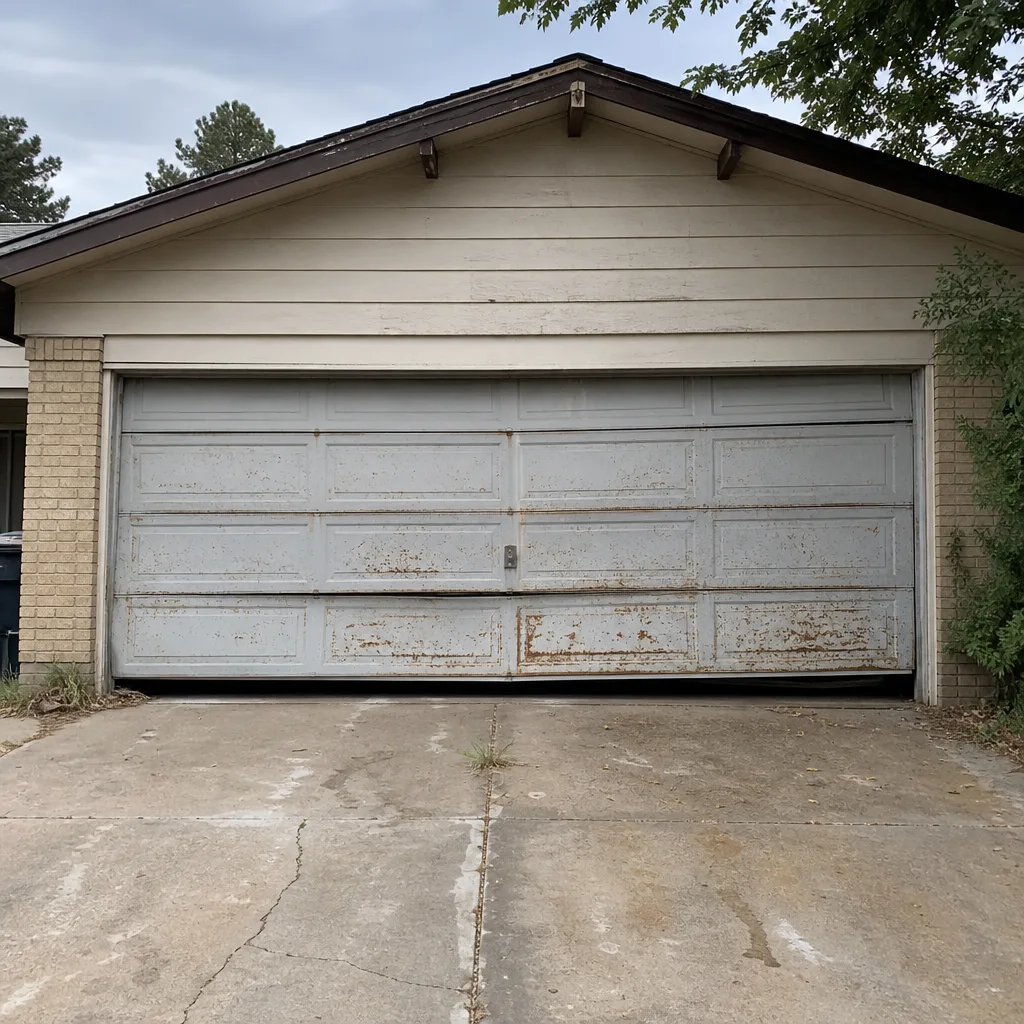 Before
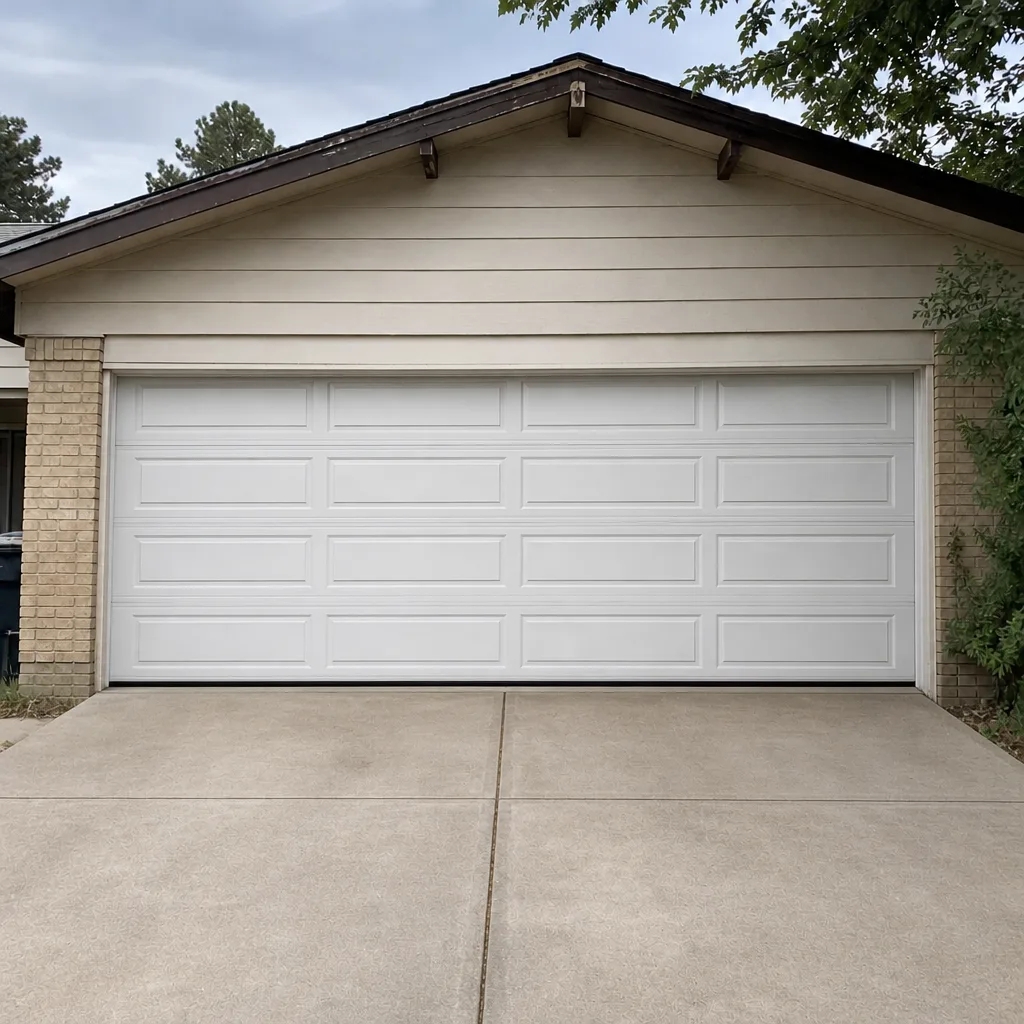 After
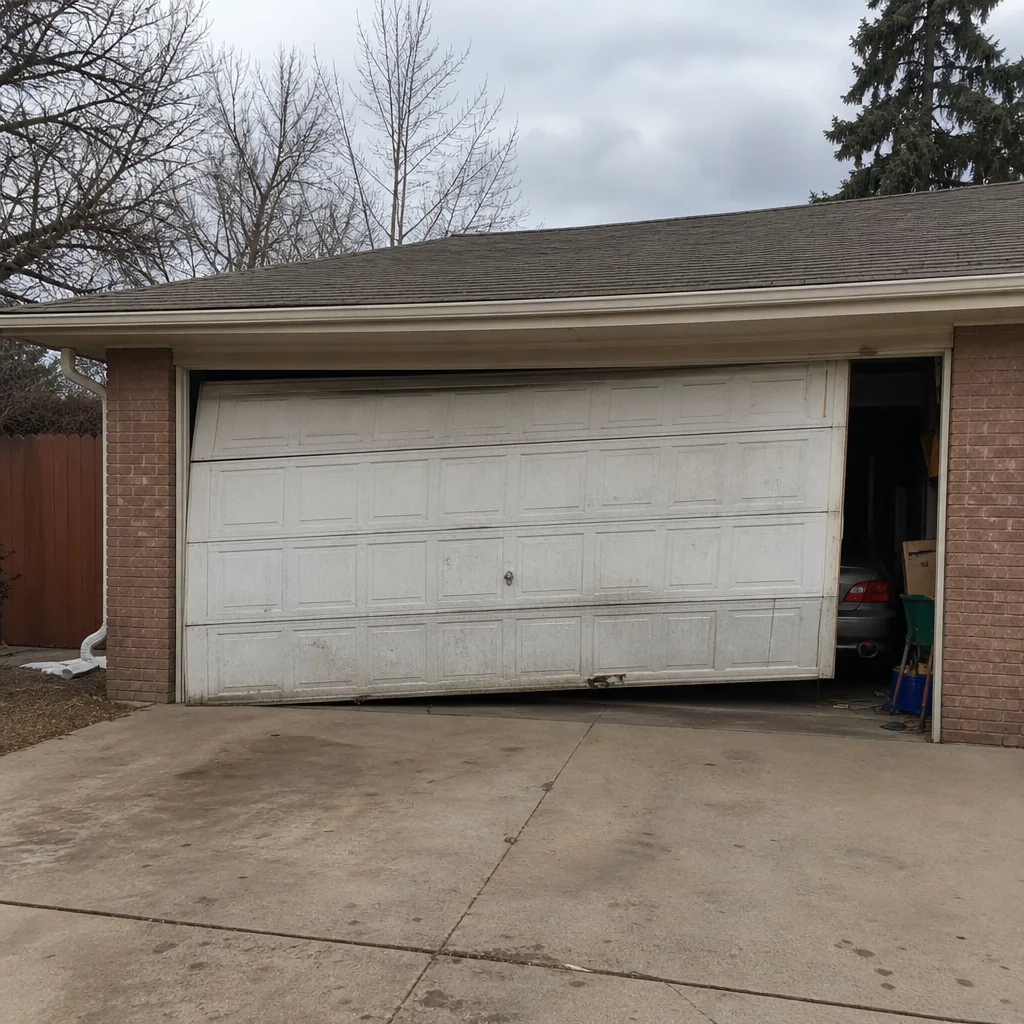 Before
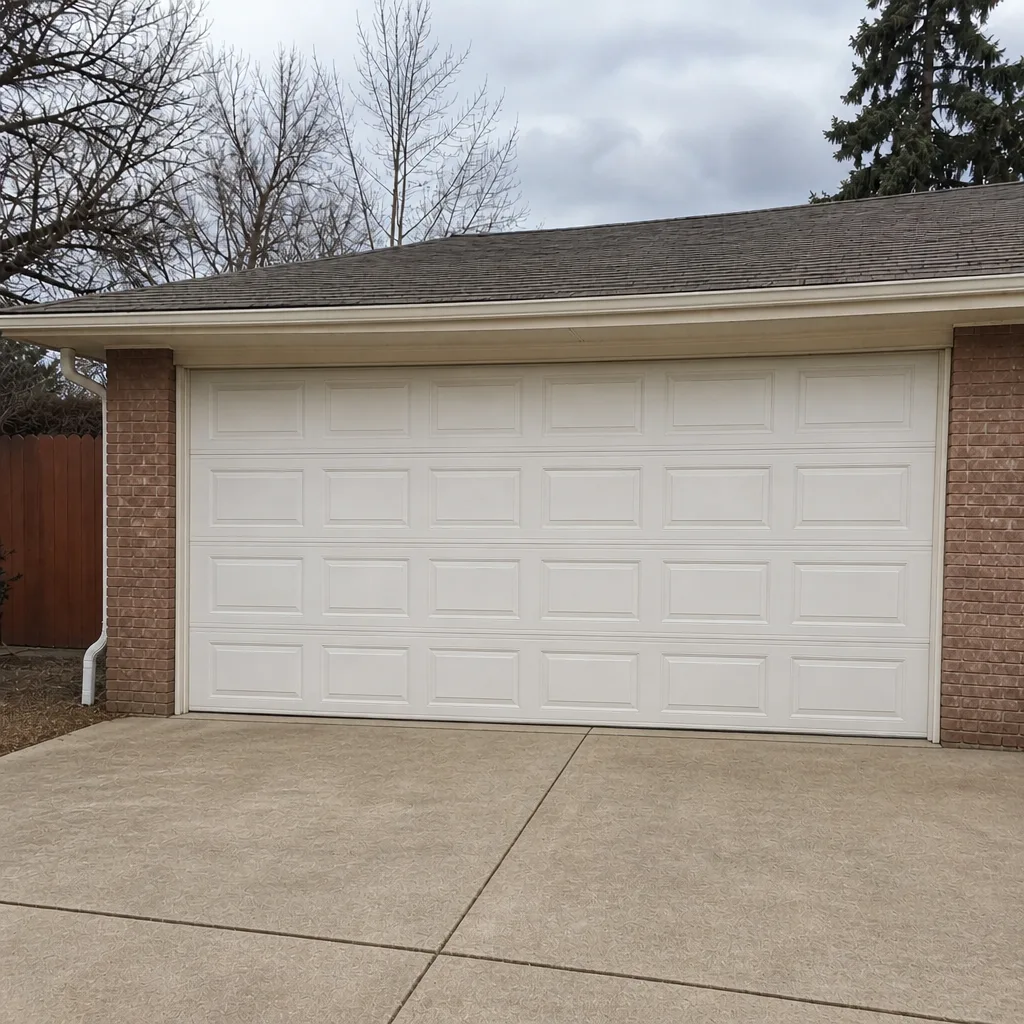 After
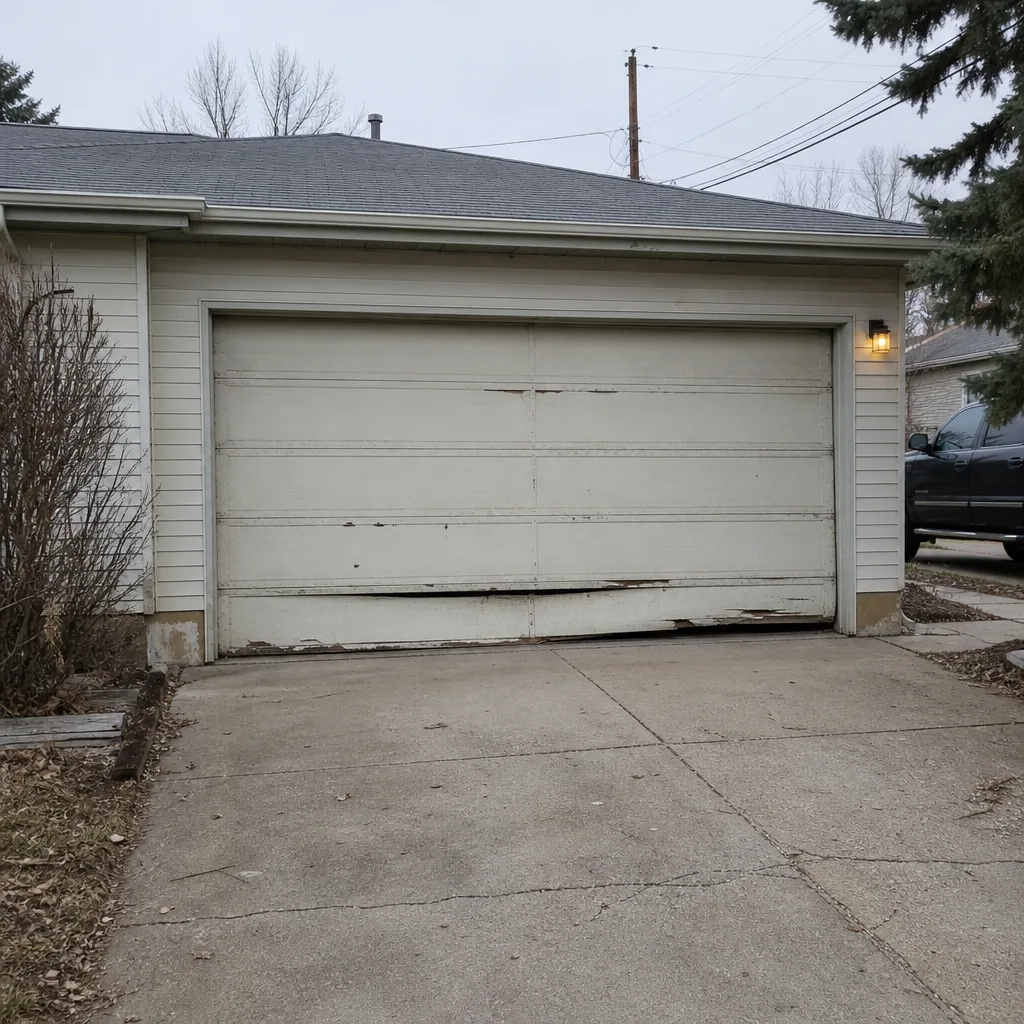 Before
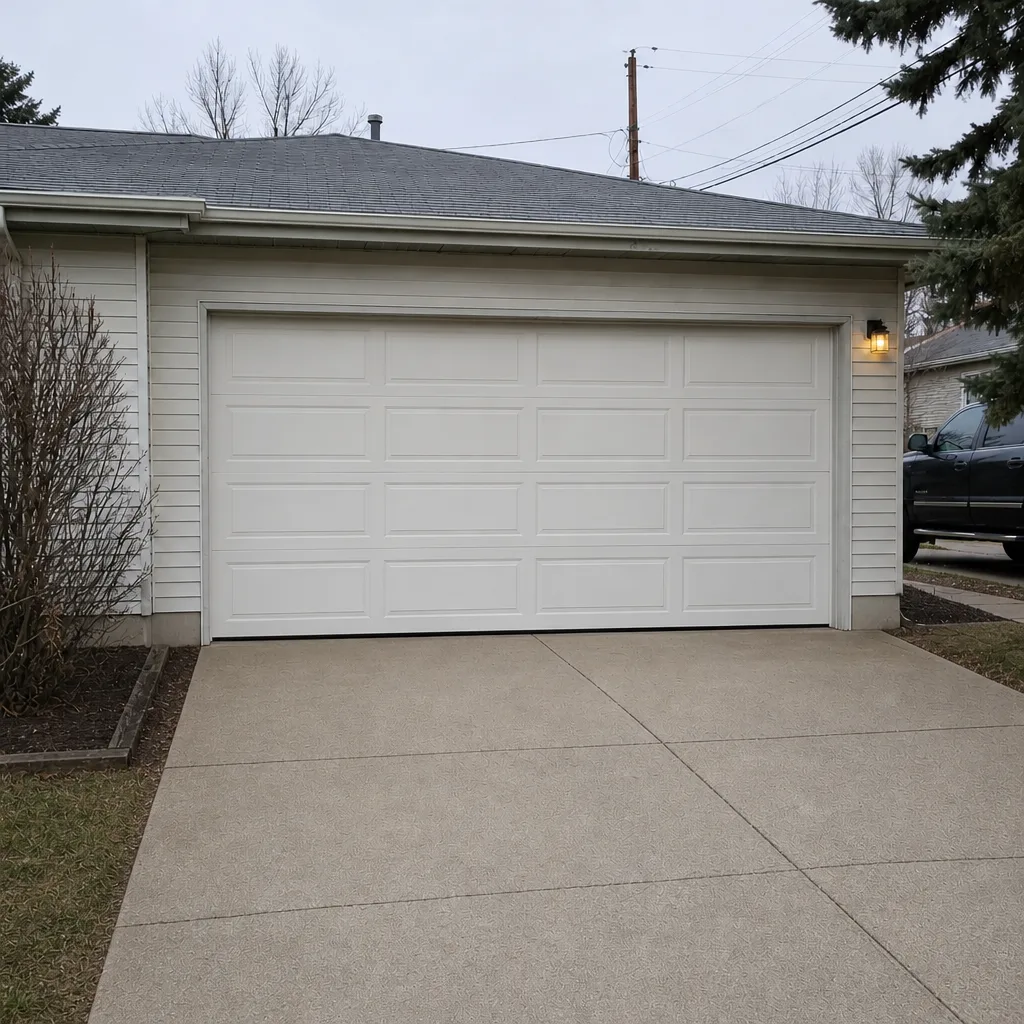 After
When to Call a Professional
Call a professional when the symptom touches a spring, cable, or any part you’d reach for with a tool while the door is under tension. Call when the door comes down hard or won’t stay up, when the balance test fails, when the force test shows the door won’t reverse, or when the opener hums and the door doesn’t move. Call if the door binds on one side, or if a track is visibly bent or pulled away from the wall bracket. A door that won’t close because a sensor is misaligned is the one common problem most homeowners can solve themselves. Everything on the touch-nothing list is a call-a-technician situation.
Linden Garage Door Repair offers free estimates in Lakewood, and we can work with your insurer if a repair is covered by a homeowner policy. Call (855) 554-3769 for a free estimate. Our technicians have up to 12 years of experience, and we work on the full system, door and opener together. We answer 24/7. Fast dispatch from 7am to 7pm, Sunday through Friday. A call outside dispatch hours is booked into the next opening, Sunday through Friday, 7am to 7pm.
Frequently Asked Questions
Most garage door repairs in Lakewood fall into a typical range of a few hundred dollars, with the exact figure set by the written estimate. Spring replacements, track realignment, and opener diagnostics have different price points, so the written estimate is what you agree to before any work starts. Call (855) 554-3769 for a free estimate – the price is quoted and agreed before we begin.
Same-day service is often available for garage door repairs. We answer 24/7, and fast dispatch runs from 7am to 7pm, Sunday through Friday. Call (855) 554-3769 and we’ll set a time. If you call outside dispatch hours, we book it into the next opening, Sunday through Friday, 7am to 7pm.
No – the written estimate sets the final price. We inspect the door and opener, diagnose the actual cause, and quote the work in writing before anything starts. If we find an additional problem partway through, you’ll hear about it and approve it before it’s done. Call (855) 554-3769 for a free estimate.
Yes. The work is performed by licensed, insured, and bonded technicians, and a single point of contact carries the job from the first call to completion. We work on eight major brands – LiftMaster, Chamberlain, Genie, Clopay, Amarr, Wayne Dalton, Craftsman, and Raynor – so you’re not turned away because of what’s on your door. Call (855) 554-3769 to discuss your door.
A door that opens but won’t close in cold weather is usually a safety sensor problem, not a spring problem. Cold can cause the sensor lenses to fog or frost, and a small obstruction across the beam will do the same. Wipe the lenses, confirm they’re aligned, and check for anything in the path. If that doesn’t fix it, the opener’s force or travel settings may need adjustment – call (855) 554-3769 for a diagnosis.
No. A garage door spring is under heavy tension and can release suddenly with enough force to cause serious injury. Winding, adjusting, or removing a spring requires specific tools and training, and the same goes for the cables and bottom brackets. Not sure whether your spring has failed? Call (855) 554-3769 and we’ll walk you through the symptoms before you touch anything.
The Bottom Line
Almost every garage door problem lands in one of four root-cause categories, and knowing which one tells you whether you have a quick check or a technician call. Run the balance test and the force test first – they tell you the most in a couple of minutes. Keep a safe distance from springs, cables, and drums at all times, and never force the opener through a bind. Lakewood’s seasonal swings explain why springs fail in the cold and tracks bind in the heat, so a little preventive attention in the transition months goes a long way. When the problem is on the touch-nothing list, call a professional and describe what the door does, where it fails, and what you hear. That single conversation is what makes the repair faster and the estimate more accurate.
For Lakewood homeowners who want their door fixed correctly the first time, we’re here to help with Linden Garage Door Repair. We’re certified across eight major brands, we separate the opener diagnosis from the door diagnosis, and we work from the door’s actual condition rather than a single manufacturer’s playbook. When you’re ready for a straight answer on cost and timeline, call (855) 554-3769. We answer 24/7. Fast dispatch from 7am to 7pm, Sunday through Friday. A call outside dispatch hours is booked into the next opening, Sunday through Friday, 7am to 7pm.
Written by the team at Linden Garage Door Repair.