
Last updated November 15, 2026
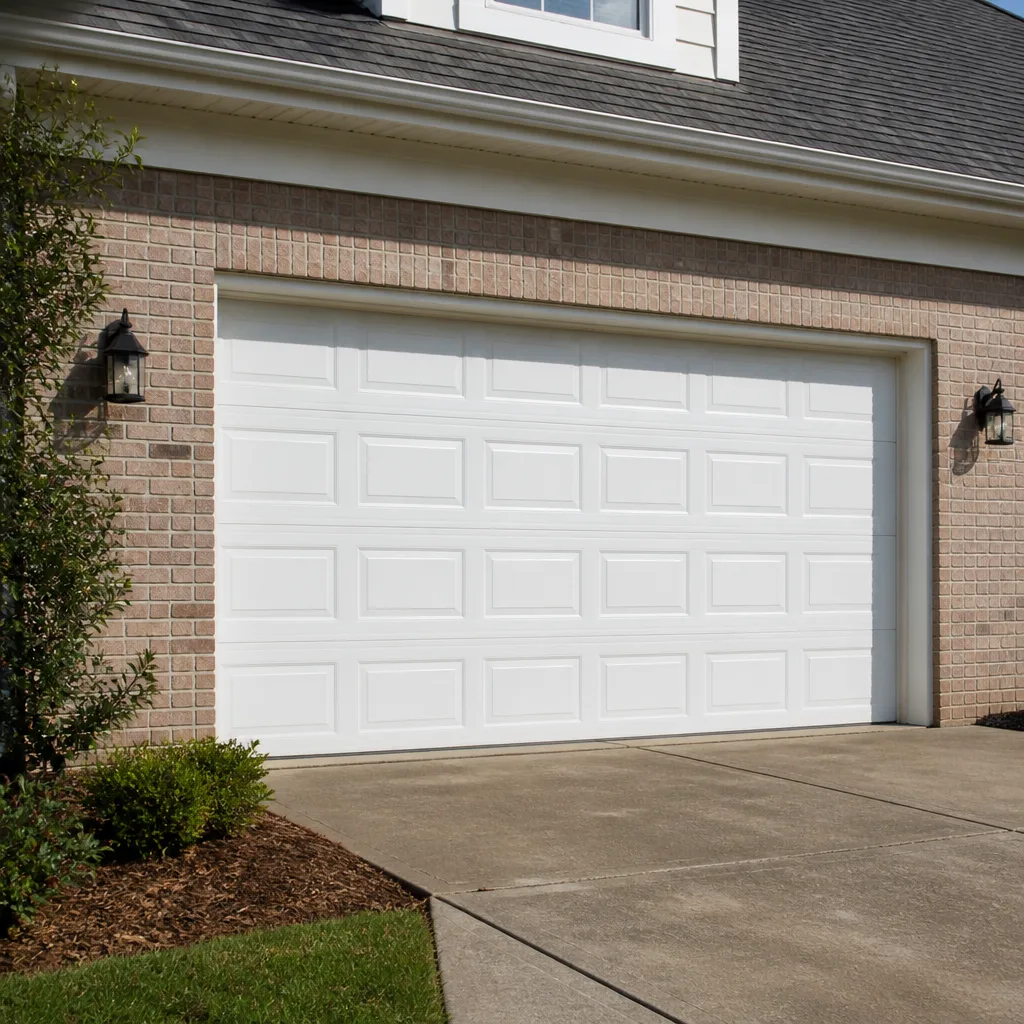 Raised-panel steel
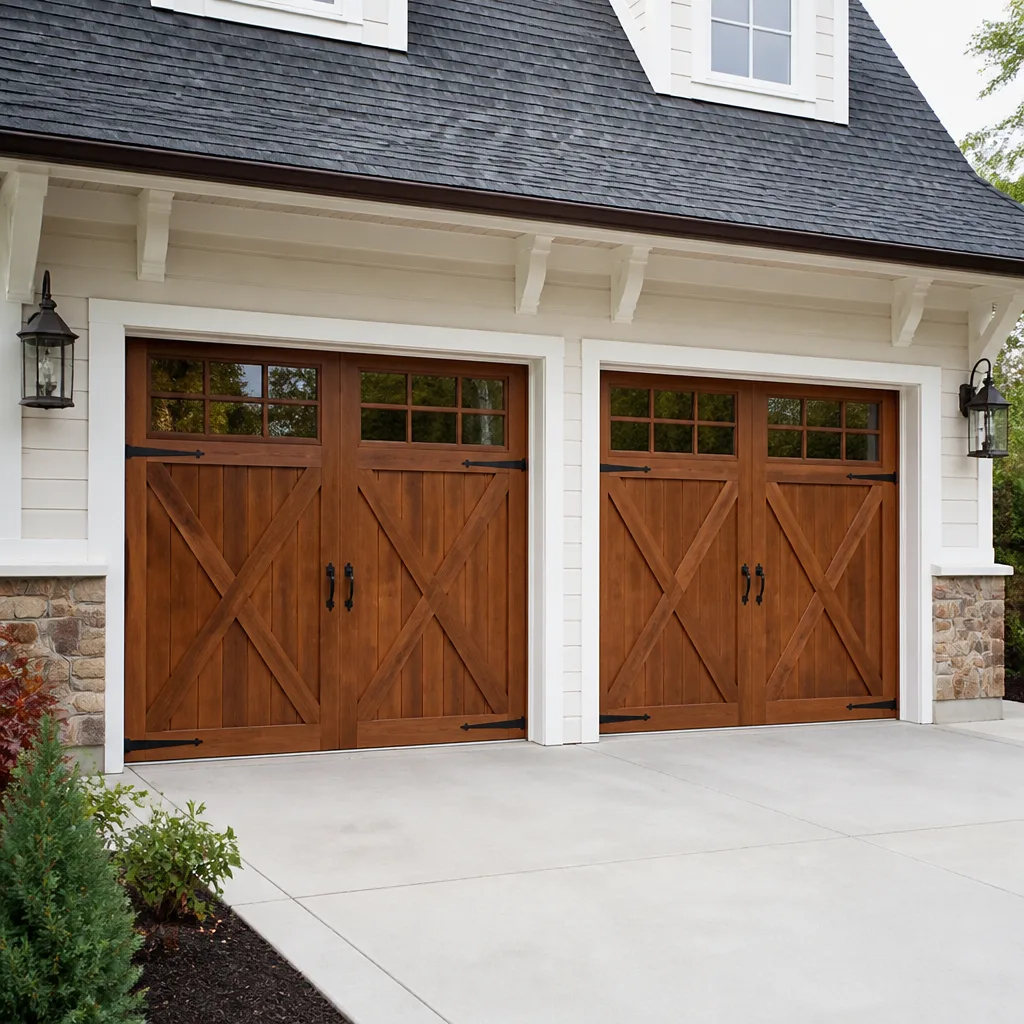 Carriage house
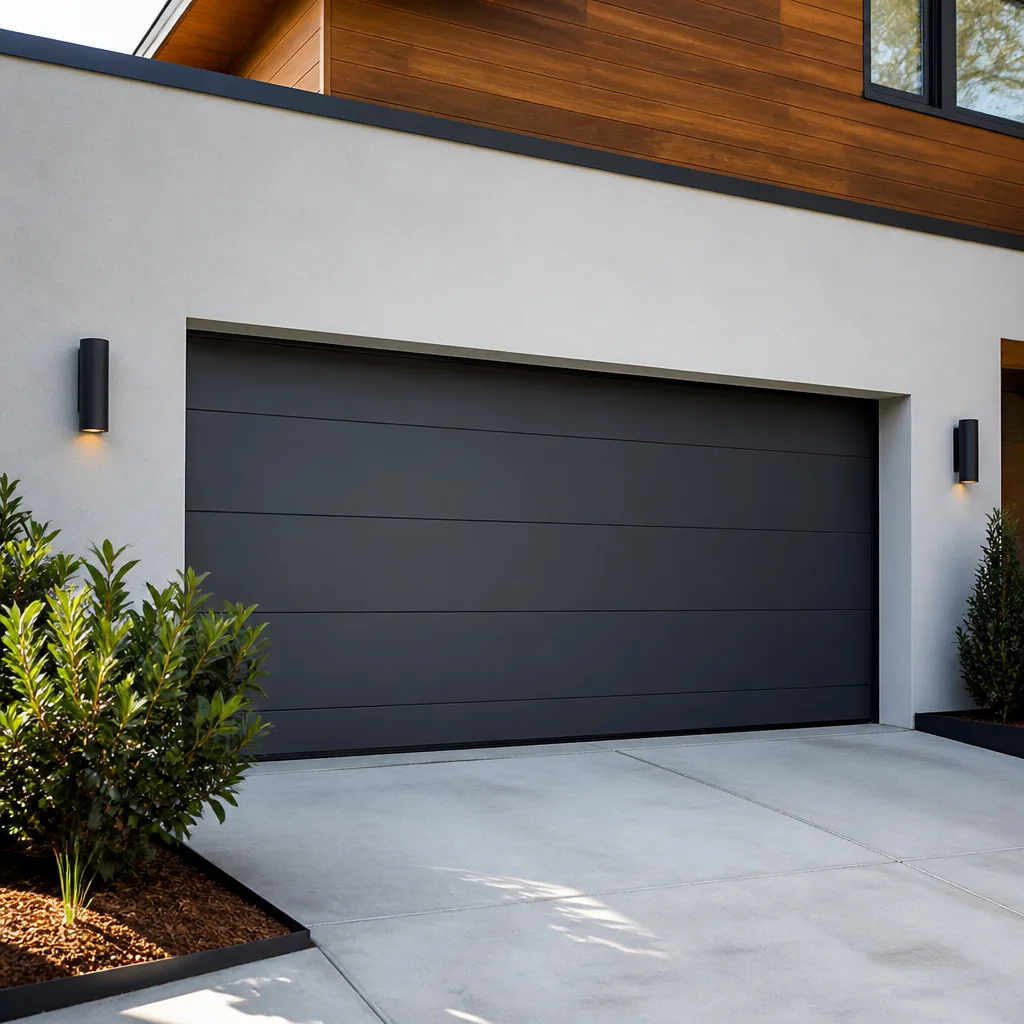 Modern flush
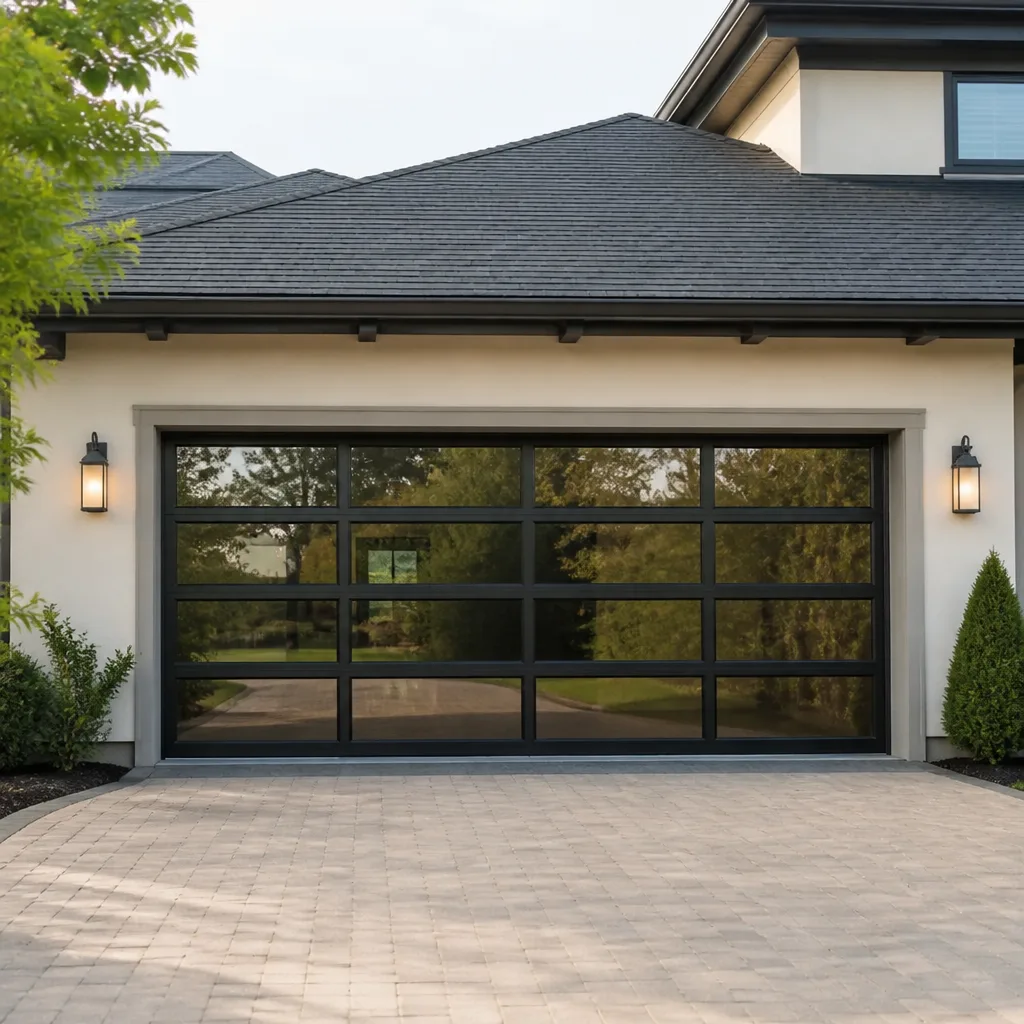 Full-view glass
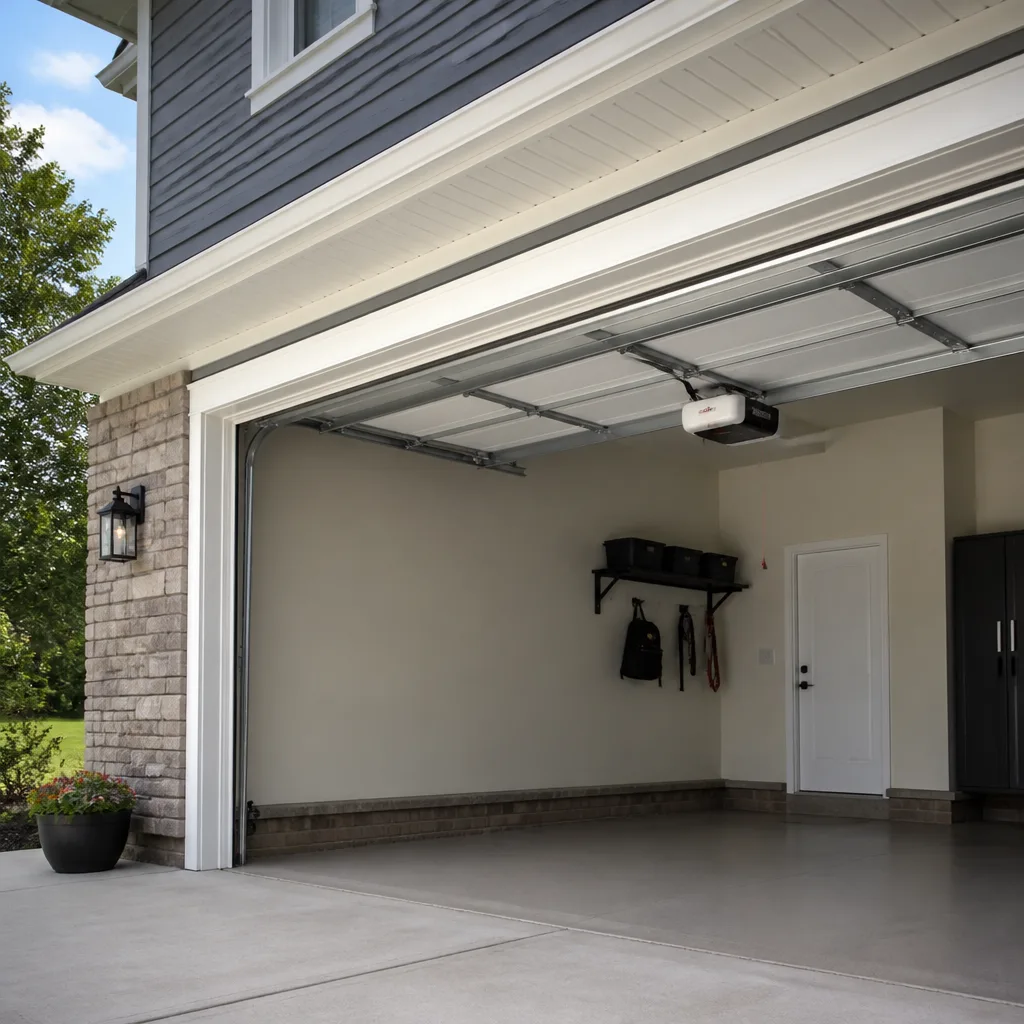 LiftMaster openers
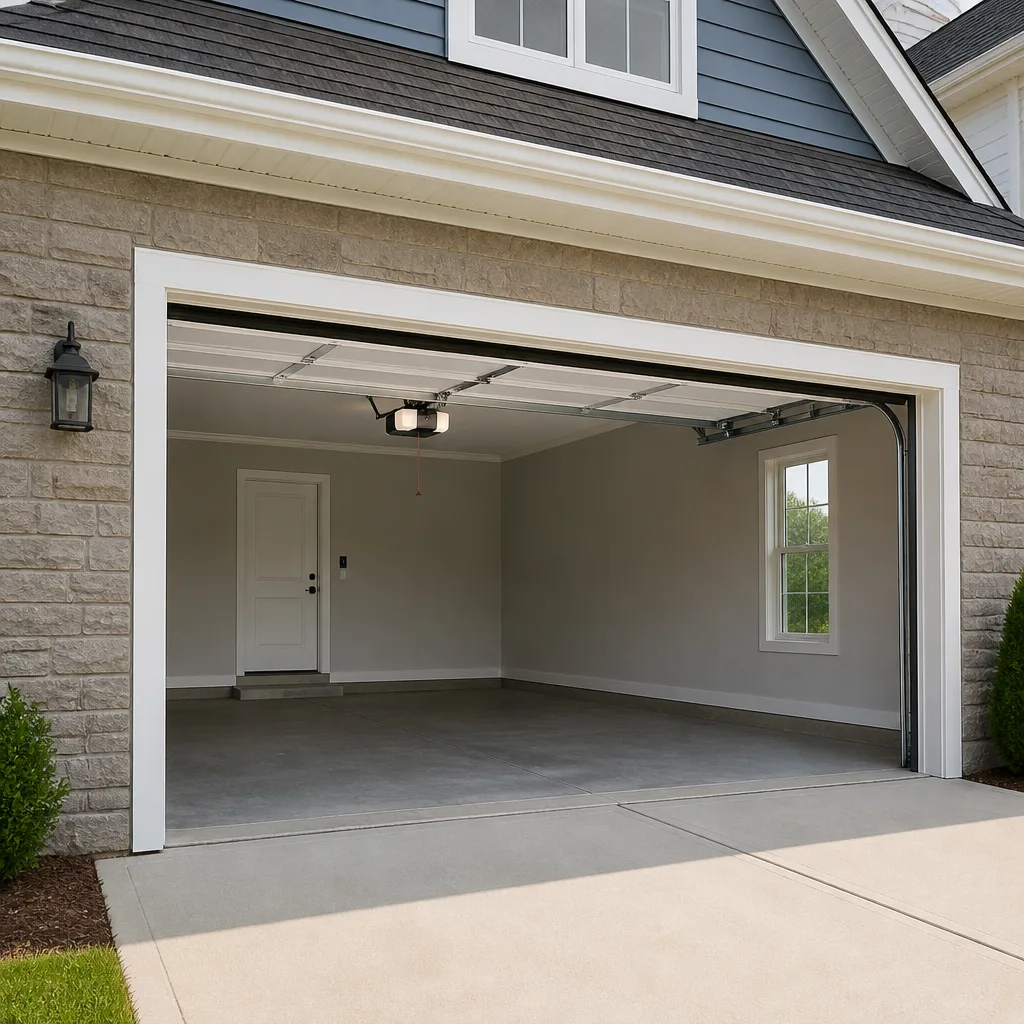 Chamberlain openers
Full 25-point door and opener safety check with every visit - springs, cables, rollers, tracks, and your LiftMaster or Chamberlain opener included
You get a price before we start. It does not change when the pro arrives.
Get your free estimateGarage Door Emergency Preparedness Guide for Lakewood Homes
Most Lakewood homeowners find out they don’t know how their garage door works until the moment they urgently need to. During a Xcel Energy outage, the first instinct is usually to pull the red cord hanging from the opener rail. That’s the right instinct in many cases, but on a door with a failing or broken spring, a hasty pull can drop the door without warning. The preparedness gap isn’t physical strength or tools. It’s knowledge. This guide covers the three emergencies that actually happen to Lakewood homes, what to do first in each, and how to set up your garage so a bad evening doesn’t get worse. You’ll finish knowing exactly where your manual release is and when not to use it.
Quick Answer
A garage door stuck during a power outage in Lakewood is usually fixed by pulling the manual release cord, disconnecting the opener carriage, and lifting the door by hand – but only after confirming the door has intact springs and moving freely. If the door feels extremely heavy, refuses to stay up on its own, or the cables look slack, stop and call a professional. Broken springs and damaged tracks are different emergencies with different first actions, and getting the first action wrong is what turns a manageable problem into a dangerous one.
Styles & brands we work with
- Raised-panel steel
- Carriage house
- Modern flush
- Full-view glass
- LiftMaster openers
- Chamberlain openers
Table of Contents
- Why Lakewood Garages Fail the Way They Do
- Power Out: Manual Release, Done Right
- How to Secure an Open Garage Door During an Outage
- The Three Emergency Scenarios and Their First Actions
- What to Keep Physically in the Garage
- Broken Spring: What’s Safe and What Isn’t
- Damaged Track: Signs You Shouldn’t Force It
- When to Call for Service vs. Wait Until Morning
Why Lakewood Garages Fail the Way They Do
Lakewood is a metro-Denver suburb where most single-family homes sit at 5,500 to 6,000 feet, and the Front Range weather does real work on garage doors. The swings are the issue. A door that sat through a 90-degree July afternoon can see a 40-degree drop by dawn the same week. That expansion and contraction cycles every spring, every bracket, and every hinge over time. The steel in the track moves. The wood or steel panels on older doors flex. Nothing dramatic happens for a while, then a spring fatigues at the worst moment and you’re standing in the driveway.
Power reliability matters too. Xcel Energy outages in Lakewood come from a handful of causes: high-wind events that roll off the foothills, summer thunderstorms, and winter ice that loads up service lines. A residential outage of a few hours is normal enough that every household should be able to operate the garage door manually without thinking about it. That includes knowing where the release cord is, how the carriage disconnects, and crucially, whether it’s safe to use.
Two other Lakewood-specific factors show up in our diagnostic experience. First, hundreds of the neighborhood’s houses were built between the 1960s and the 1990s, and many still have their original openers and doors. A LiftMaster or Craftsman unit from 1995 doesn’t have the same safety reverse technology that a current-model opener does. Second, a lot of Lakewood drives slope gently toward the house. When someone forces a door that has a broken spring or a bent track, the door is now sitting on a slope and possibly off-travel. That’s when panels buckle.
What a Prepared Garage Looks Like
Prepared isn’t complicated. It’s a known release cord, a checked spring, a flashlight that lives in the garage, and an idea of what to do when the automatic lock fails. That’s the baseline. The rest is knowing when not to touch the door and to call in a trained technician instead. None of that requires a handyman’s skill set, just a ten-minute walk-through of the garage with the information in this guide. We’ve seen how much difference it makes in Lakewood when a homeowner can answer the phone question “what’s your door doing right now?” with a clear picture.
Power Out: Manual Release, Done Right
When the opener loses power, the door doesn’t need electricity to be lifted by hand. It needs the opener carriage disconnected from the drive rail. This is the step every manufacturer puts in the manual, and the step most homeowners have never read. Pulling the cord releases the carriage from the belt or chain drive, so the door can move freely along its track. If you’ve never done it, practice it once before you need it. Then push the carriage back into engagement and let the opener cycle to confirm it reconnects.
But here’s the safety verification almost no manual covers. Before you pull that cord, you need to know whether your door is spring-balanced and healthy, because a spring-compromised door has no counterbalance. The springs are what make a 150-pound door feel like 15 pounds. Without working springs, the door’s full weight is fighting you, and if the door is up when you disengage the opener, it can slam down. That’s not a hypothetical in our line of work. It’s the single most preventable injury in garage door service.
Step-by-Step: The Safe Manual Release
- Check the springs visually. Look at the torsion spring above the door or the extension springs along the sides. If any coil is visibly separated with a clear gap, the spring is broken. Do not pull the release cord.
- Test the door by hand while still connected. With the opener carriage still engaged, try to lift the door a few inches manually. If it feels nearly impossible to move, your springs aren’t carrying the load. Do not pull the cord.
- With the door fully closed, pull the release cord downward and toward the door. You should feel the carriage disengage with a positive click. The cord stays pulled.
- Lift slowly and test the balance. Raise the door partway and let go at about 3 feet off the ground. A balanced door will stay roughly where you leave it. A door that falls is spring-compromised and should be lowered gently and left alone.
- Operate by hand until power returns. Never run the opener with the carriage disconnected, and never leave the carriage hanging loose and the door in motion when kids or pets are in the garage.
- Re-engage the carriage. When power comes back, pull the manual release cord to re-engage the carriage or push the door closed until the carriage clicks back in, then run the opener one cycle to test.
If your door is a Craftsman or Raynor unit with an older belt drive, the release mechanism is the same in principle even if the pull-cord shape varies. LiftMaster and Chamberlain openers typically have the cord hanging from a red or gray handle near the rail, and the pull direction is toward the door. When in doubt, call before pulling. If you’re in Lakewood and want a garage door examined after a hard pull or a slam, we can send a technician out for an in-person assessment through our garage door repair service.
How to Secure an Open Garage Door During an Outage
Here’s the security gap that almost nobody thinks about until it matters. If your door is open when the power goes out, and you can’t close it manually, your garage is wide open to the street. Most modern openers include an automatic deadbolt-style lock that engages when the door is fully closed and disengages when the opener starts to move. In a power outage, that lock stays in its current state. If the lock had already disengaged, your door may only be held by the manual release and pure geometry. If the door is fully open, you need another way to secure it until power returns or a technician arrives.
Practical Ways to Close Off the Opening
- Close the door manually if it’s safe. This is the first choice. Follow the manual release steps, lower the door by hand, and leave it down. A balanced door will hold itself closed with the weight on the springs.
- Use the interior slide lock if your door has one. Many doors have manual locking bars on the inside that slide into the track and lock the door in the down position. Slide it in from inside the garage.
- Prop and block. A pair of boards cut to the door’s closed height can be wedged in the bottom corners from inside to prevent a forced opening. Not aesthetic, but they work for a night.
- Use the vehicle as a barrier. If the door can’t be closed, park a vehicle perpendicular to the opening from inside, and lock the vehicle.
- Lock the connecting door. If the garage connects to the house, lock the interior door and treat the garage as the exterior boundary.
The reason we emphasize this in Lakewood is because the door often faces the street or the alley, and a garage door that sits open for hours is the kind of thing neighbors notice and would rather not. A garage door stuck open after a power outage is a common call. A door that someone forced down with the springs dead is a much more expensive service. If a door is stuck open and the homeowner isn’t sure it can be closed safely, our garage door opener repair service handles the opener side directly, and our technicians can work on the door and opener together as one job.
The Three Emergency Scenarios and Their First Actions
Every garage door emergency in Lakewood fits one of three categories. The single most useful preparedness skill is being able to identify which one you’re in, because the first action differs in each. Getting the category right determines whether you manage the situation or make it worse.
Scenario 1: Power Out
First action: verify the door is balanced, then use the manual release. This is the scenario where the least danger exists, provided the springs are healthy. If you’re unsure, test the door by hand before you pull the cord. If it won’t lift, call. If it lifts easily and holds, disconnect and operate manually.
Scenario 2: Broken Spring
First action: do not force the door. A broken torsion spring or extension spring leaves the door with no counterbalance. The door may be sitting partway open and will slam down if it’s moved. The safest response is to gently lower the door if it’s up (using two people if possible), then leave it closed and call for help. Do not attempt to pull a door up onto a broken spring. The weight is enormous and the cables can snap.
Scenario 3: Damaged Track or Bent Panel
First action: stop the opener and leave the door in place. If you hear a bang or grinding sound and the door is stuck halfway, do not keep running the opener. The drive is fighting a door that can’t move. That’s how motors burn out and how bent panels become bent tracks. Turn the opener off at the wall or breaker, and call for same-day service. In our experience, a stuck door that’s still in the track can be repaired in hours; a door that’s been forced is a replacement job.
Each of these three scenarios has a wrong first action that escalates cost. The wrong response to a power outage rarely costs anything. The wrong response to a broken spring or bent track can cost hundreds in additional repair. If you’re not sure, call and describe what you see. We can diagnose the category before anyone comes out.
What to Keep Physically in the Garage
The most useful preparedness tools are the least complicated. None of this lives in the car, because you can’t count on having access to the car when the garage door is the barrier. Everything on this list stays on a shelf, hook, or pegboard inside the garage, in a place you can reach without moving the car.
The Garage Emergency Kit
- A printed emergency reference card. Fold a card and tape it near the opener switch. Write down: the phone number for a professional, which side your manual release is on, the model of your opener, and whether your door has a manual slide lock on the inside.
- A flashlight that lives in the garage. Not one that gets borrowed and never returned. Tape it to the shelf if you have to. The garage goes dark during a power outage and the release cord is small.
- A marked manual release location. Once you’ve identified the release cord and carriage, mark the cord with a bright zip tie or tape so it’s findable in the dark. This step alone saves minutes in an emergency.
- A pair of work gloves. If the door needs to be closed by hand, hands on a steel panel in the cold are not reliable. Gloves make the manual lift safer.
- A printed copy of your owner’s manual. The manual for your opener and door, with the page folded to the manual release section. If you have a LiftMaster, Chamberlain, Genie, or Craftsman opener, the manual is available to download, but do it before you need it.
- A note on the interior house door. “Garage: release cord on the left rail. Slide lock on right side.” A sticky note works.
If your door or opener is old and the original manual is gone, that’s an argument for having a technician come out and walk you through the release procedure on the actual door. We work on equipment from eight major brands – LiftMaster, Chamberlain, Genie, Clopay, Amarr, Wayne Dalton, Craftsman, and Raynor – so whatever’s on your door, we can show you exactly where the release is on your model. That’s the kind of thing that should happen on a Saturday morning, not at 10pm on a winter night.
Broken Spring: What’s Safe and What Isn’t
A broken spring is the most dangerous garage door emergency you can have at home. The springs are steel under tension. A torsion spring above the door is wound hundreds of times to counterbalance the door’s weight, and when it fails, it releases that stored energy in a fraction of a second. Extension springs along the sides, if they’re not captured by a safety cable running through the center of the spring, can fly loose when they break. That’s why current doors include secondary containment on extension springs, but many older Lakewood doors still have extension springs without safety cables. We see them often enough that it belongs in this guide.
The problem isn’t the break itself. It’s what the door does in the seconds after the break. If the door was up when the spring failed, the door’s full weight is now unheld. It can come down hard. If you’re under it, that’s a serious injury. If you’re beside it, you may reach out to stop it, and that’s how hands and arms get hurt. The safest reflex after hearing a loud bang and seeing the door drop or hang is to step back, not forward.
What to Check (Not Fix) After a Spring Break
- Step back first. Assume the door is unstable. Get clear of the door’s path before looking.
- Check the access door. If the garage door is closed or stuck, the connecting door between house and garage becomes the emergency exit. Confirm it’s unlocked.
- Look for a visible gap in a spring coil. A clear separation in the spring means it’s broken. Do not run the opener.
- Check the cables. Slack cables on one side often accompany a spring failure. Do not touch them. They’re under tension when the door is up.
- If the door is up, lower it gently by hand. Only if it’s reachable and the door isn’t already in motion. Use both hands and keep your body to the side, never underneath.
- Call for service. Spring replacement is not a homeowner job. The winding bars, the tension, and the containment all require a trained technician. The cost of a technician visit is far less than a hospital visit.
If you’re not sure whether a spring is broken or just noisy, don’t test it by running the door. We can diagnose a spring issue over the phone in most cases. If it’s a confirmed break, our team handles spring replacement as part of our Linden Garage Door Repair service. Spring replacement is a same-day repair in most cases, and the door can be back in service quickly once the technician arrives.
Damaged Track: Signs You Shouldn’t Force It
Damaged tracks are the third emergency category and the most easily misdiagnosed. A track that’s bent slightly still looks fine, and the door still moves, so homeowners keep running the opener until it stops entirely. By then the rollers have jumped the track, panels are misaligned, and what could have been a small repair is now a weekend without a garage. In Lakewood, the winds that roll off the foothills in spring and early summer are often the trigger. A door that was hit by a gust or bumped by a car can develop a bend that gets worse over a few weeks of normal use.
Signs Your Track Is Damaged
- The door hesitates or grinds as it moves. A healthy door is quiet and smooth. Grinding or a hesitation at a specific height usually means a bent track or a roller out of its channel.
- The gap between door and track changes. Look down the vertical track from the bottom. If it looks wavy instead of straight, or the door’s edge pulls away from the track at certain heights, the track is out of alignment.
- Visible bend in the vertical or horizontal track. This is easy to see from inside. Look for kinks or dents.
- Door won’t close fully. If the door stops short, the safety reverse may be sensing an obstruction, or the bottom edge is out of its horizontal track.
- A loud bang followed by a stuck door. That usually means a roller has left the track and the door is now supported by the opener carriage alone. Stop the opener and call.
If you see any of these signs, stop the opener and leave the door alone. A bent track can often be repaired in place with the right tools if it hasn’t been forced. Once the door has been driven against a bent track for hours, the fix is a track replacement. In our experience, the cost of a track repair is a fraction of a track replacement, and the difference comes down to how quickly the operator stopped. A door that’s been stuck on the track for a day before the call usually needs more work than one that stopped the moment the owner noticed.
When to Call for Service vs. Wait Until Morning
The call-or-wait decision is where most Lakewood homeowners hesitate. The answer comes down to a simple rule: if the door is stable and safe, it can wait. If the door is unstable, in the opening, or has a broken spring, it shouldn’t. Here’s the decision mapped out.
Call Immediately (Same Day)
- The door is hanging open and cannot be closed safely.
- A spring is visibly broken or a cable is slack.
- The door is stuck halfway and running the opener makes it worse.
- A vehicle is trapped inside the garage and access is needed urgently.
- The door is at risk of slamming or has already dropped unexpectedly.
Safe to Wait Until the Next Dispatch Window
- The door is closed and stable, and the opener isn’t responding. The opener is the likely issue.
- The door opens and closes fine but is noisy. Spring, roller, or hinge wear that needs a service call.
- The opener hums but doesn’t move the door. The gear or drive is likely worn, and the door itself is safe.
- The remote or wall switch doesn’t respond, but the wall button works. A safety sensor or connection issue that isn’t urgent.
On the cost side, the wait decision is rarely more expensive than the call. A stable door with a dead opener sitting closed until a service visit costs the same repair as one rushed out of the same situation. The call is about safety, not about the invoice. The price is the price either way, and the written estimate sets it before any work starts. That’s true for a power outage call and a morning call equally. If you’re in Lakewood and want the door looked at after a stuck-door event, we serve Lakewood with licensed and insured technicians, free estimates, and a written price before work begins.
Common Mistakes to Avoid
- Pulling the manual release without checking the springs. The release cord is the right move in an outage and the wrong move on a spring-compromised door. A quick hand-lift test before the pull prevents the worst outcome.
- Forcing a door that has a broken spring. Pushing the door up or down with the springs dead is how people get hurt and how panels buckle. Leave the door in place and call.
- Running the opener on a stuck door. If the door is jammed, the opener is fighting a stuck door every time the button is pressed. It burns out gears and strips belts faster than anything else in the trade. Turn it off and call.
- Leaving a door open during an outage. The automatic lock is disabled and the house is exposed. Block the opening or close it manually before nightfall, even if it’s just for a few hours.
- Storing the flashlight in the car. This is the most common preparedness mistake we hear. If the car is inside and the door is the barrier, the flashlight in the glove box is useless.
- Assuming the opener is the problem when the door is the problem. A door that grinds, hangs, or reverses often has a door issue, not an opener issue. A brand-agnostic diagnostic is how you find out which it is.
- Not knowing the brand of your door and opener. If you have to call a pro from the garage in a power outage, the first question is “what’s on your door?” Having the brand (LiftMaster, Chamberlain, Genie, Clopay, Amarr, Wayne Dalton, Craftsman, Raynor) written down on the garage reference card speeds up every call.
See the difference
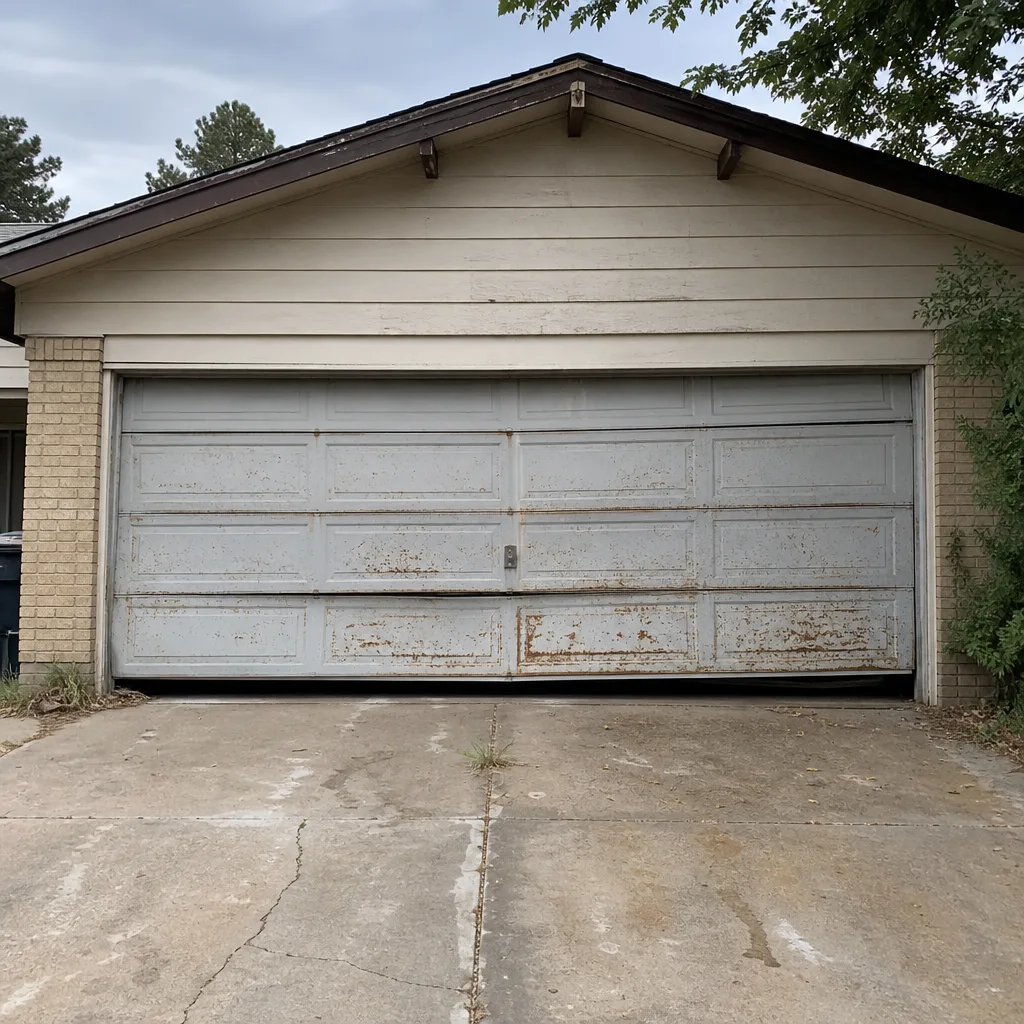 Before
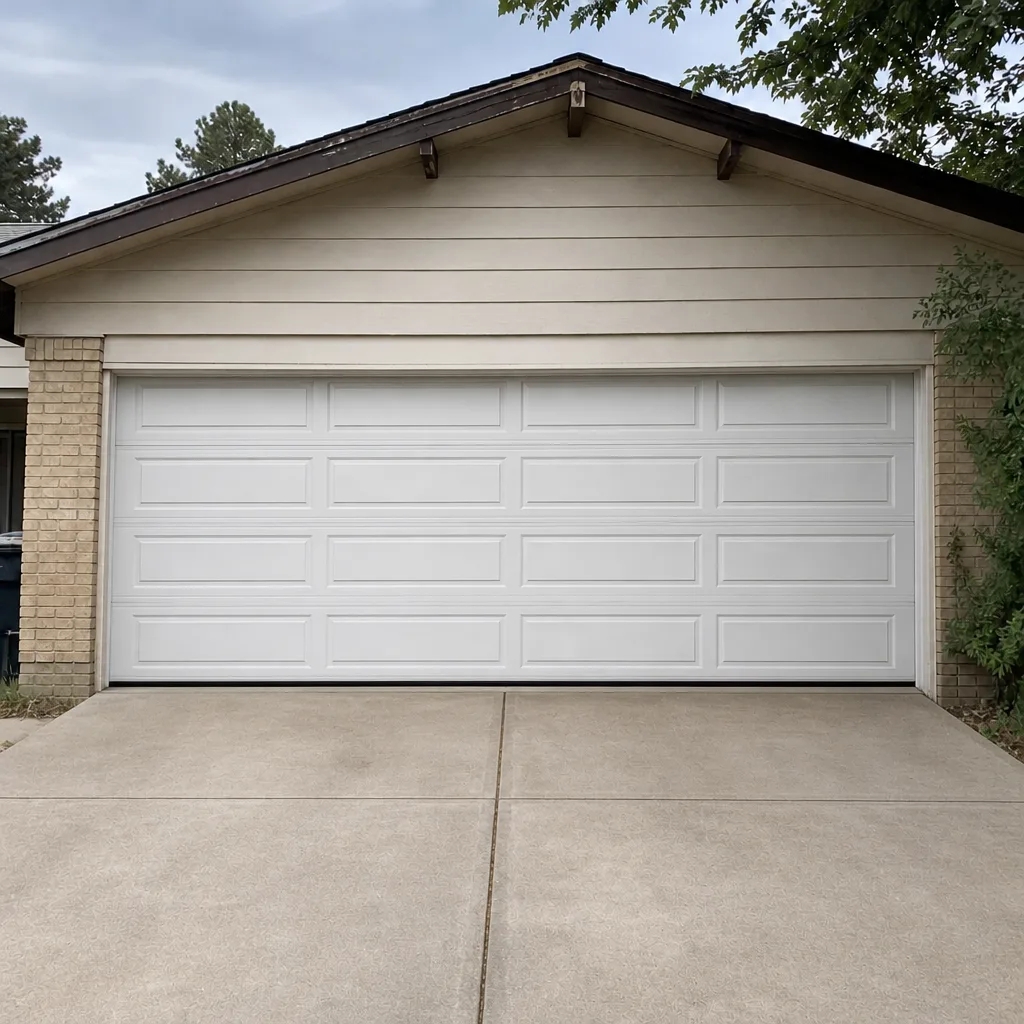 After
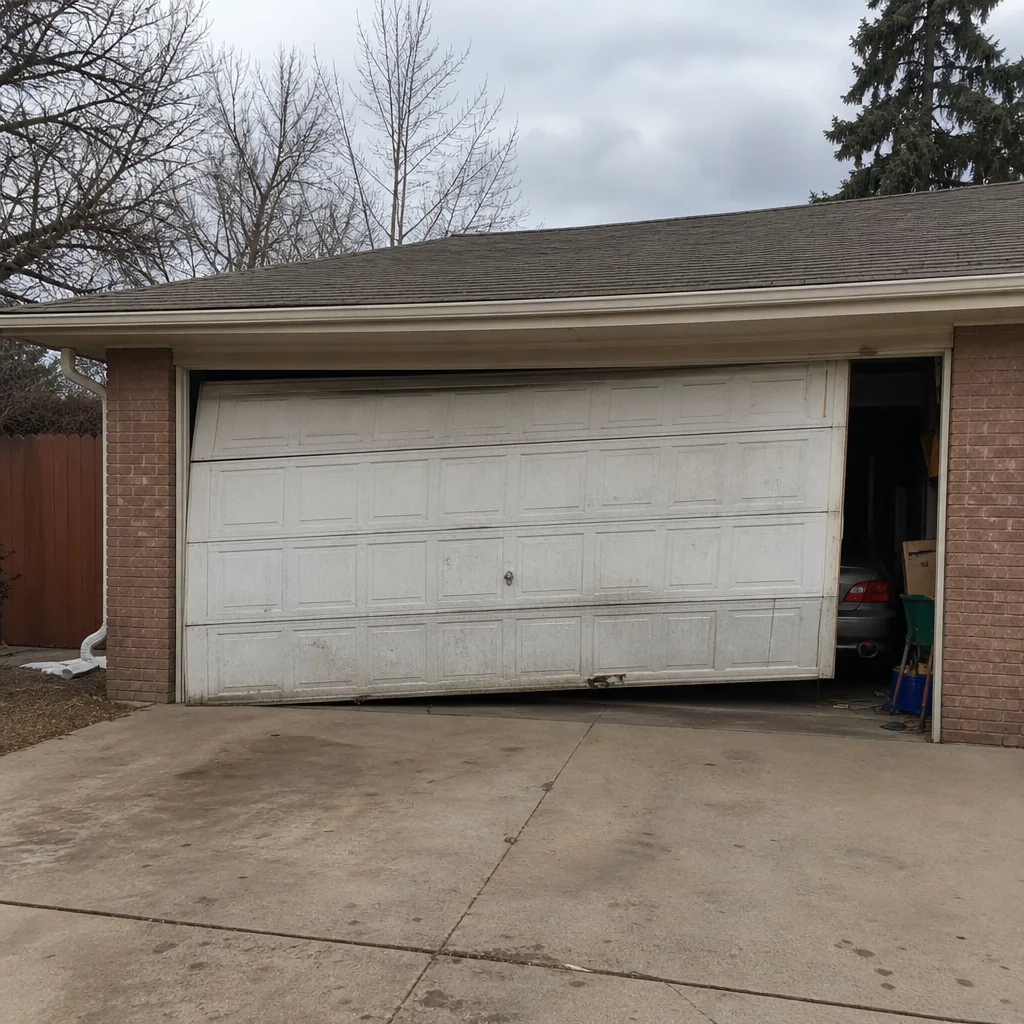 Before
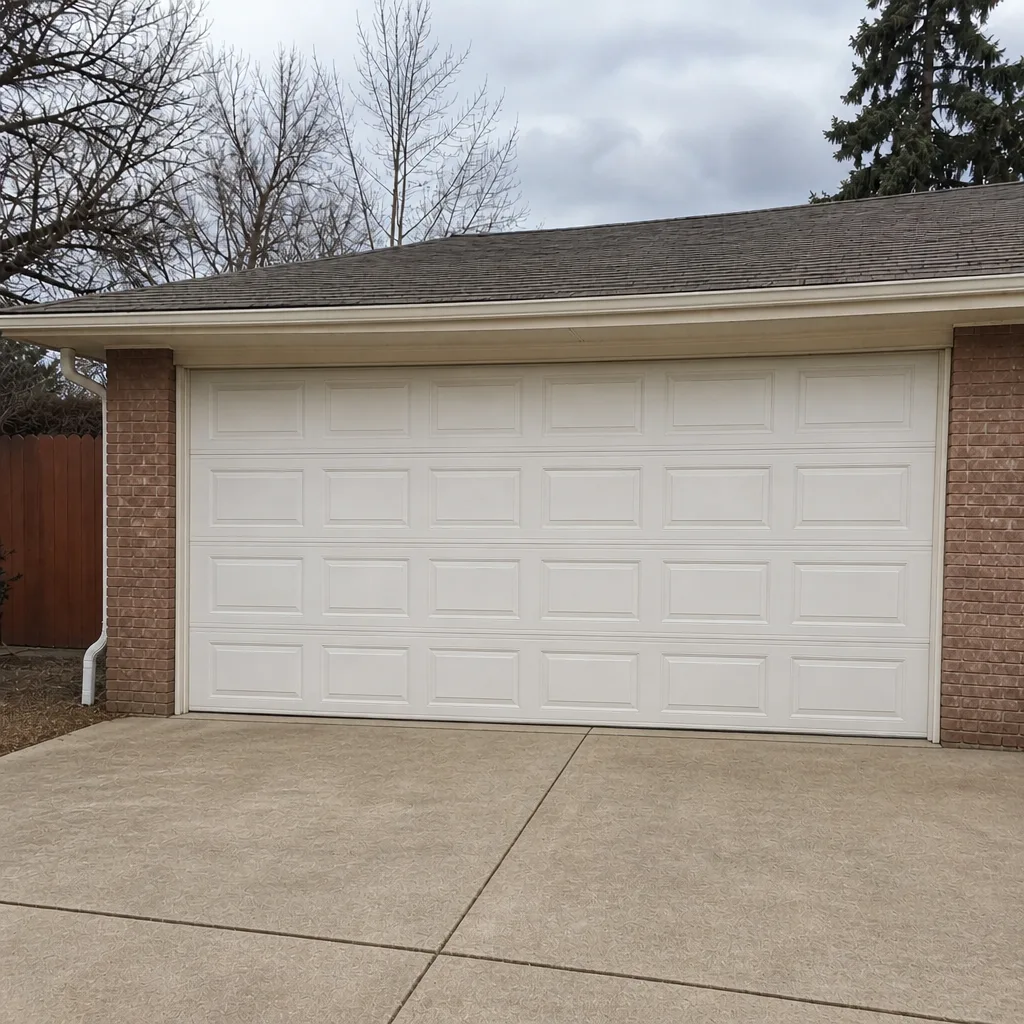 After
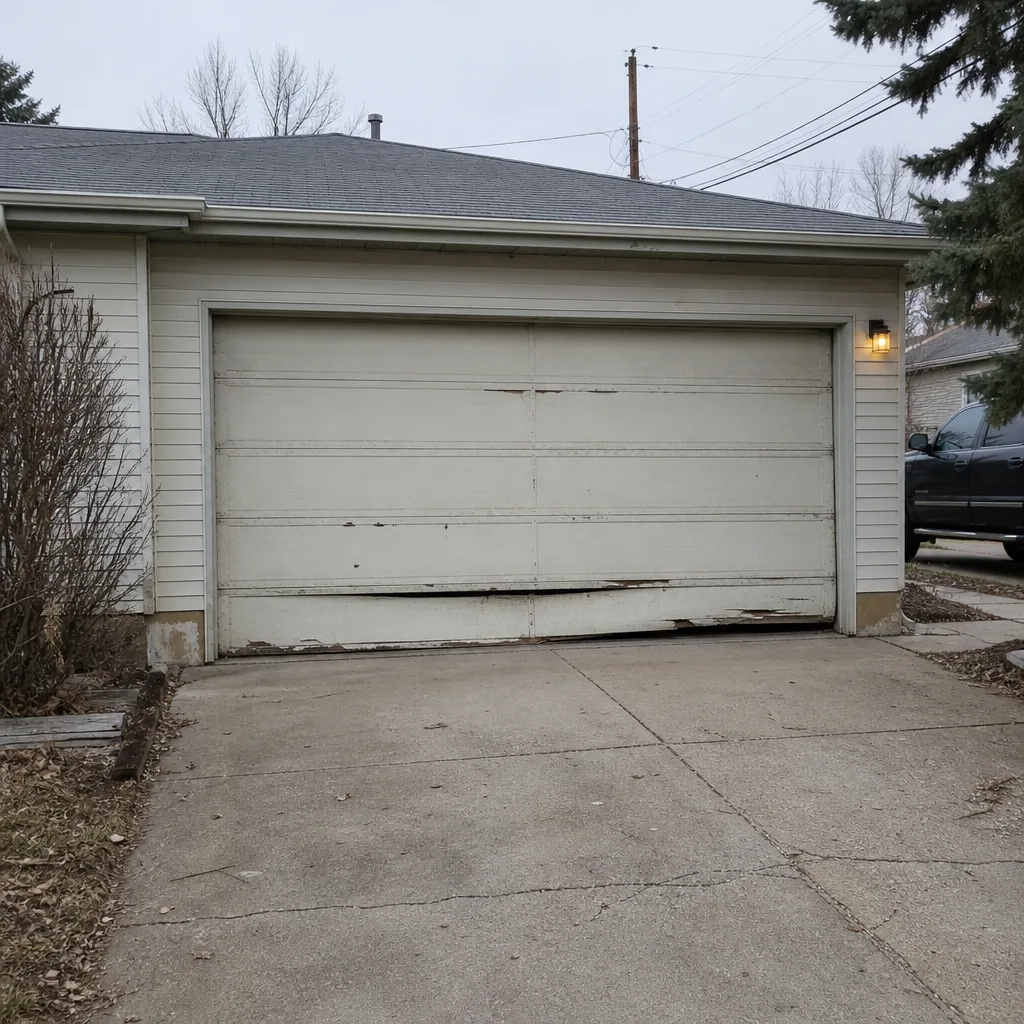 Before
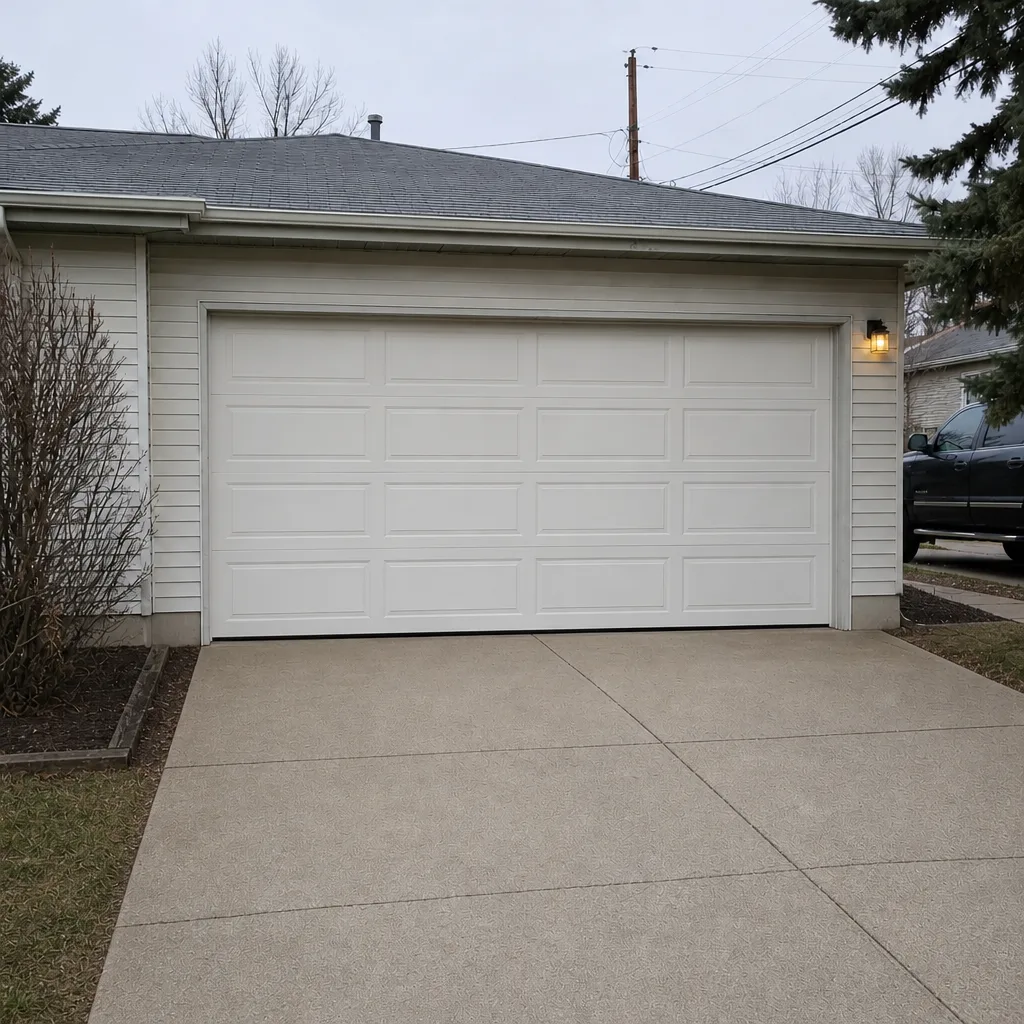 After
When to Call a Professional
Call us when the door is unstable, stuck, or open; when a spring is visibly broken; when the track is bent or the door has left it; when the car is trapped and you can’t close the door safely; or when a door that was working suddenly reverses, grinds, or stops short. We answer 24/7. A call outside dispatch hours is booked into the next opening, Sunday through Friday, 7am to 7pm. Fast dispatch from 7am to 7pm. Our technicians have up to 12 years of experience and work on all eight major brands: LiftMaster, Chamberlain, Genie, Clopay, Amarr, Wayne Dalton, Craftsman, and Raynor. We do repair, opener repair, and installation under one roof, so once we’re on the job, the same team handles the door and the opener. Linden Garage Door Repair offers free estimates in Lakewood. Call (855) 554-3769.
Frequently Asked Questions
Check the springs by hand first, then pull the manual release cord to disconnect the opener carriage, and lift the door manually. Test the balance by letting the door go at waist height; if it falls, the springs are compromised and you need to lower it and call before doing anything else. We answer 24/7, and a call outside dispatch hours is booked into the next opening, Sunday through Friday, 7am to 7pm. Call (855) 554-3769 for an exact quote, and estimates are free.
The manual release cord hangs from the carriage that slides along the opener rail, usually a foot or two from the door. It’s normally a red or gray handle attached to a short cord. On a LiftMaster or Chamberlain opener, the cord pulls downward and toward the door to disengage. On a Craftsman or Genie, the mechanism is similar even if the handle looks different. If you can’t find it, feel along the rail while the garage is lit, or have a technician show you on your next service visit.
Close the door manually if it’s balanced, use the interior slide lock if the door has one, and block the opening from the inside with boards or a vehicle. Lock the connecting door between the garage and the house and treat the garage as the exterior wall. A door that stays open for hours is an exposed house, even in a low-crime neighborhood. If you can’t close the door safely because a spring or track is damaged, call and we’ll schedule the repair.
Yes. A broken spring leaves the door with no counterbalance, and the door can drop without warning if it’s moved. Leave the door in place, keep people and pets clear, and call for same-day service. Spring work is not a homeowner job; the tension is too high and the cables are dangerous. We handle spring replacement as part of our repair service, and the written estimate sets the price before any work starts. Call (855) 554-3769 for an exact quote.
Yes, if the door’s springs are healthy. Pull the manual release cord to disengage the carriage, then lift the door. Test the balance first. If the door is extremely heavy or won’t stay up partway, the springs are worn or broken, and you shouldn’t force it. A door that’s hard to lift by hand is a spring repair, not an opener repair, which is why a brand-agnostic diagnostic matters. We service openers and doors separately and together, and we can tell you which one is the actual problem.
Look at the vertical track from the bottom. If it looks wavy, if the door’s edge pulls away at certain heights, or if you hear grinding at a specific point in the travel, the track is the likely issue. If the door moves smoothly but the opener doesn’t run, hesitates, or hums without moving the door, the opener is the issue. Turn the opener off first, then look. We diagnose the door and the opener as separate systems, which is how you avoid replacing an opener when a track was the real problem.
The Bottom Line
Lakewood garage door emergencies fall into three predictable categories: power out, broken spring, and damaged track. Each has a right first action, and getting it right is the difference between a quick repair and a more expensive one. The power outage case is the one you can fully prepare for. Know where your manual release is. Test your springs by hand before you pull the cord. Keep a flashlight and a printed reference card in the garage, not in the car. And for the other two, don’t force the door. When the situation is unstable, the call is cheaper than the damage. Linden Garage Door Repair works on all eight major brands and handles repair, opener repair, and installation under one roof. Call (855) 554-3769. We answer 24/7. Fast dispatch from 7am to 7pm, Sunday through Friday.
Written by the team at Linden Garage Door Repair.